1
00:00:04,040 --> 00:00:06,500
[Auto-generated transcript. Edits may have been applied for clarity.]
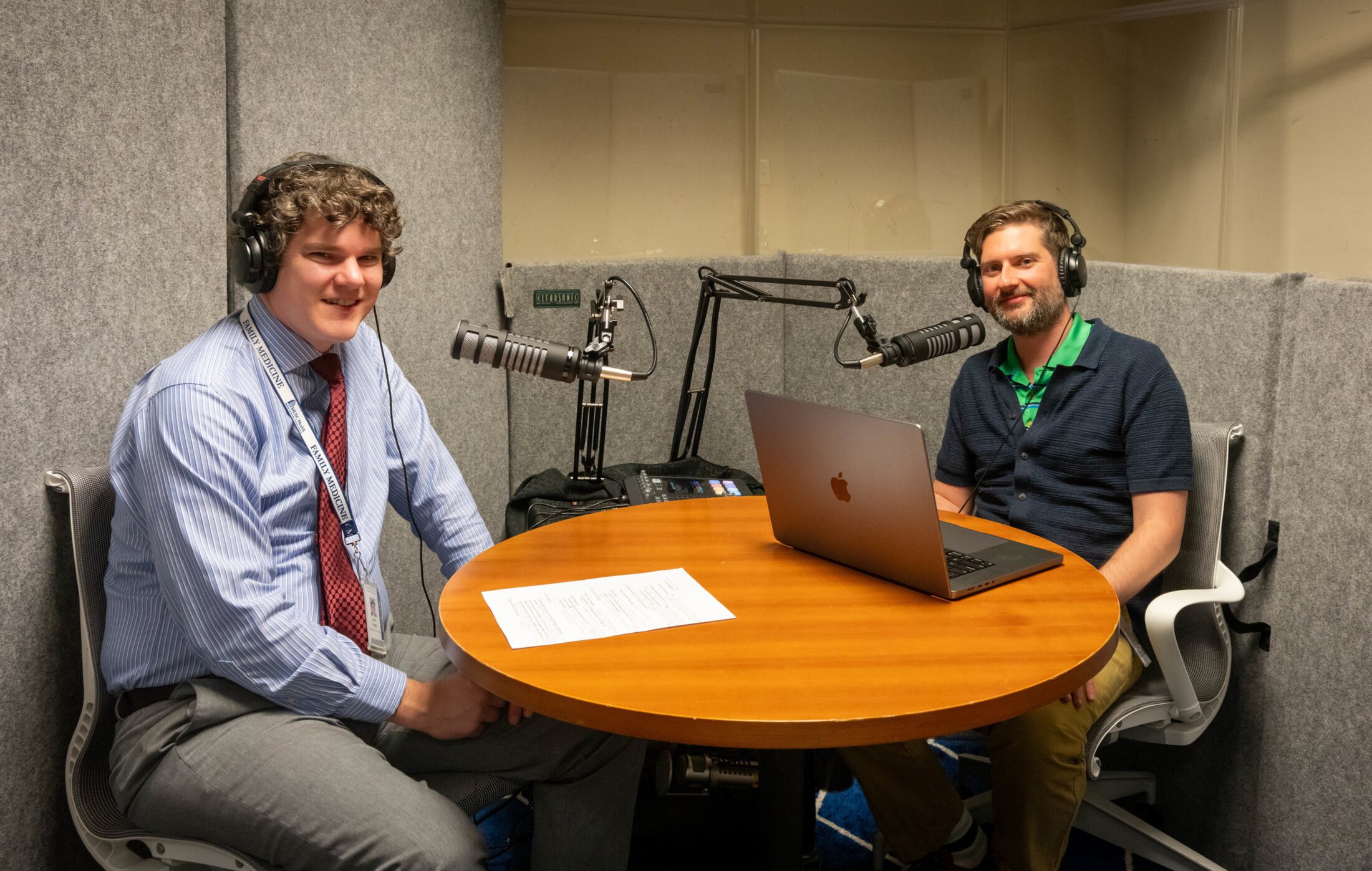
Alex Walters: What's up everyone? Welcome back to the Learning Curve.
2
00:00:07,010 --> 00:00:12,470
For this episode, I was joined by Doctor Scott Bragg, a professor at the MUSC College of Pharmacy.
3
00:00:13,040 --> 00:00:18,260
During this conversation, we discussed his journey to MUSC, how his teaching philosophy has evolved,
4
00:00:18,590 --> 00:00:23,570
teaching and clinical experiences that have impacted how he now approaches instruction and course design.
5
00:00:23,990 --> 00:00:28,220
The College of Pharmacy's new curriculum and the importance of faculty being in development.
6
00:00:28,640 --> 00:00:34,790
And we close the conversation with the discussion around AI and how this is affecting the pharmacy profession and education.
7
00:00:35,300 --> 00:00:38,840
This was a great conversation full of fantastic insights.
8
00:00:39,380 --> 00:00:42,620
I hope that you enjoy this episode of The Learning Curve.
9
00:00:49,830 --> 00:00:56,340
Alex: Awesome. How's your week going so far? And I know it's Monday, but how's your first few hours been so far versus yours has gone?
10
00:00:56,340 --> 00:00:59,370
Scott Bragg: Well, I had a class at ten so that's okay. That went smoothly.
11
00:00:59,370 --> 00:01:04,020
So that's always good. Yes. You know good to start the week smoothly.
12
00:01:04,230 --> 00:01:08,250
Alex: So awesome. Um, so like I mentioned we are already recording.
13
00:01:08,340 --> 00:01:11,159
Okay. So we're just going to kind of jump into it. Very good.
14
00:01:11,160 --> 00:01:17,940
Um, and I always like to start these episodes kind of talking about folks is like personal journey.
15
00:01:18,000 --> 00:01:21,690
So how do they get to that? Their position now at MUSC.
16
00:01:21,690 --> 00:01:26,219
So if you could kind of just walk us through, um, your journey to where you are now.
17
00:01:26,220 --> 00:01:32,190
So your background and what kind of go from there? Scott: Sure. So I didn't expect to be in a teaching role.
18
00:01:32,190 --> 00:01:38,519
When I first, uh, went into pharmacy, I went to West Virginia University for my undergraduate,
19
00:01:38,520 --> 00:01:44,400
got into pharmacy school, thought I wanted to be an independent community pharmacist.
20
00:01:44,880 --> 00:01:47,370
Along the way, I transitioned a few times.
21
00:01:47,370 --> 00:01:55,719
So the first time I, um, developed type one diabetes in the middle of pharmacy school, and that was a kind of life changing experience.
22
00:01:55,720 --> 00:02:03,420
But I was able to volunteer at a pediatric diabetes camp in the summer of my, uh, second and third year of pharmacy school.
23
00:02:03,900 --> 00:02:10,590
That kind of led me into thinking I wanted to be a clinician, because I was able to see the impact we were able to make.
24
00:02:11,280 --> 00:02:15,000
At that point, I was like, I definitely want to be a pharmacy preceptor.
25
00:02:15,030 --> 00:02:19,919
Um, as a as a pharmacist. But I wasn't bought and sold on academia at that point.
26
00:02:19,920 --> 00:02:26,520
But, uh, went into residency, uh, master residency in, in Pittsburgh, Pennsylvania, UPMC Saint Margaret.
27
00:02:26,940 --> 00:02:29,190
And from there, I just caught the teaching bug.
28
00:02:29,190 --> 00:02:37,770
So there, um, pharmacy residency was kind of married to a family medicine, uh, faculty development fellowship.
29
00:02:37,950 --> 00:02:44,160
And so they went through all things being a faculty member, running a meeting, doing a research portfolio.
30
00:02:44,610 --> 00:02:50,879
How do you improve your teaching skills? How do you precept, how are you a contributing faculty member?
31
00:02:50,880 --> 00:02:56,040
And that kind of got me really interested in faculty development, interested in lifelong learning.
32
00:02:56,400 --> 00:03:04,620
And that led me into looking at exclusively academic pharmacy teaching positions, both teaching within family medicine,
33
00:03:04,680 --> 00:03:12,780
working with medical students, working with medical residents to working with uh, College of pharmacy students, uh, pharmacy residents.
34
00:03:13,170 --> 00:03:20,640
Um, and it was really a nice marriage for me as far as one that was able to kind of take, uh,
35
00:03:20,670 --> 00:03:29,550
a lot of my faculty development training within, uh, residency and, uh, put it on a different, um, trajectory for my career.
36
00:03:29,820 --> 00:03:35,219
Okay. Very interesting. Um, so, first of all, um, go, mountaineers, because I'm also, I'm from West Virginia.
37
00:03:35,220 --> 00:03:38,879
Mountaineers. We've got a, um. Yeah, I wish a tournament game. Exactly.
38
00:03:38,880 --> 00:03:42,180
Very excited about. It's the one time I wish we had video actually had like a Western new water bottle.
39
00:03:42,180 --> 00:03:45,870
Some be, like, pointing at the camera right now. Um, yeah. But anyway, so that's really interesting.
40
00:03:45,870 --> 00:03:51,209
Um, so, so basically you kind of went into it, you definitely weren't sure if you wanted to get in academia.
41
00:03:51,210 --> 00:03:57,540
You never really saw yourself in the classroom. You had this evolution where, um, you know, you're working, said you're working with like residents,
42
00:03:57,540 --> 00:04:00,599
working with like, students, and you kind of kind of caught the bug.
43
00:04:00,600 --> 00:04:03,809
And then you kind of it's kind of evolved from there.
44
00:04:03,810 --> 00:04:10,020
Right? So talk about, um, how you kind of got into more the didactic part of teaching.
45
00:04:10,020 --> 00:04:14,520
So you're you're now decided you've got the teaching bug, it's time to stand in front of a class and kind of,
46
00:04:14,880 --> 00:04:17,620
you know, teach that way, um, talk about that experience.
47
00:04:17,620 --> 00:04:21,389
So I think that's very interesting for folks to hear about, um, how that kind of got started for you.
48
00:04:21,390 --> 00:04:23,610
And what was your experience like in those terms as well?
49
00:04:23,910 --> 00:04:29,250
So I feel like a little bit of a fraud as a teacher, kind of not having a formal teaching background.
50
00:04:29,250 --> 00:04:35,280
My my family is a family of teachers. My aunt was a teacher for 35 years.
51
00:04:35,280 --> 00:04:37,710
My sister is a medical middle school teacher.
52
00:04:38,130 --> 00:04:44,370
Um, back in West Virginia, um, I had no formal training, you know, outside of my faculty development fellowship.
53
00:04:44,370 --> 00:04:51,120
But one of the things as part of that program, um, and also a few things with the residency we lost,
54
00:04:51,120 --> 00:04:56,939
uh, a resident, they were, um, not wanting to be a pharmacy resident, uh, after a few months.
55
00:04:56,940 --> 00:05:03,600
And so we had to pick up the extra lectures as part of that, um, uh, person moving on from the residency program.
56
00:05:03,990 --> 00:05:06,600
Um, with that, I taught every other week.
57
00:05:06,600 --> 00:05:13,950
So I was giving a formal lecture, whether it's a small group, whether it's a didactic lecture every other week through the rest of residency,
58
00:05:14,310 --> 00:05:17,790
which was difficult to prepare on a lot of different content.
59
00:05:17,790 --> 00:05:23,820
But it was kind of a a nice thing. It was trial by fire. It it got me to realize I can speak in front of others.
60
00:05:24,090 --> 00:05:33,030
I actually like the interaction of an audience being able to clarify points, um, slow you down, speed you up.
61
00:05:33,450 --> 00:05:41,130
And I just really kind of fell in love with that, um, classroom teaching, um, in the College of Pharmacy.
62
00:05:41,910 --> 00:05:48,530
At first we were, um, primarily teaching through precept ING and doing small group work, but that.
63
00:05:48,620 --> 00:05:56,299
Kind of gradually grew as I was able to kind of, um, go through years and years of being offered different opportunities.
64
00:05:56,300 --> 00:06:02,300
And so I've kind of built up over the course of time, the amount of teaching hours from 1 or 2 hours,
65
00:06:02,300 --> 00:06:09,920
kind of didactic teaching, the first few years to, um, probably 20, 30, 40, um, depending upon the year.
66
00:06:10,310 --> 00:06:16,879
In subsequent years. So, um, and I think each time you give a lecture, you learn a little bit about the content,
67
00:06:16,880 --> 00:06:24,080
you connect things from a, um, basic science to apply it a little bit more effectively,
68
00:06:24,080 --> 00:06:28,309
or you learn things clinically while you're, um, working as a clinician,
69
00:06:28,310 --> 00:06:32,450
and you're able to kind of share those stories and experiences with, with learners.
70
00:06:32,810 --> 00:06:37,790
And, and that's what I absolutely love about the teaching that I do within the, within the classroom.
71
00:06:37,790 --> 00:06:48,019
A lot of the, um, lectures and materials that I try to build are case based, um, scenarios where we're able to actively apply things to a case,
72
00:06:48,020 --> 00:06:53,509
and I'm able to challenge people by saying, hey, if this lab were different, what would you do?
73
00:06:53,510 --> 00:06:58,069
Or if the patient presented with this complication, how would you go about managing that?
74
00:06:58,070 --> 00:07:04,040
And I find that to be my most rewarding teaching when I'm able to kind of relate
75
00:07:04,040 --> 00:07:08,300
things to things that I am seeing on a day to day basis and being able to,
76
00:07:08,660 --> 00:07:12,260
um, stay dynamic with that interaction with students. Definitely.
77
00:07:12,260 --> 00:07:16,100
So it sounds like and I always like to ask folks about their teaching philosophy too.
78
00:07:16,100 --> 00:07:17,629
So it sounds like, um,
79
00:07:17,630 --> 00:07:23,030
kind of one of the things at the core of your teaching philosophy is like creating relevance so that you're talking about case studies,
80
00:07:23,030 --> 00:07:26,570
you're talking about telling stories, um, you know, to make those connections.
81
00:07:27,290 --> 00:07:34,370
How is your teaching philosophy evolved? So from that day, one that you were in the classroom is you've gained more hours, gained more experience.
82
00:07:34,580 --> 00:07:37,760
What's changed, uh, over the years, teaching philosophy wise.
83
00:07:38,180 --> 00:07:45,680
So, so I think in, in my kind of background, early on, I recognized that I was interested in, in lifelong learning,
84
00:07:46,040 --> 00:07:52,010
in kind of constantly improving my abilities to take care of patients and, and be able to educate others.
85
00:07:52,400 --> 00:08:02,510
And that's really where a lot of it centers on. So I think that I try to take all the experiences that I have in, in different academic settings,
86
00:08:02,510 --> 00:08:06,260
whether it's writing a paper, how can I actually apply that to patient care?
87
00:08:06,260 --> 00:08:11,270
How can then I incorporate that into my teaching? What are new resources that I can share with learners?
88
00:08:11,270 --> 00:08:14,480
So, um, that was one thing that I did in lecture today.
89
00:08:14,540 --> 00:08:22,849
Um, I was teaching a, uh, case on pancreatitis and was trying to talk about drug induced pancreatitis.
90
00:08:22,850 --> 00:08:29,120
And I was like, you know, there's a lot of drugs that are associated with pancreatitis, but we're going to take a stop here.
91
00:08:29,450 --> 00:08:33,049
You all have a looked at, um, severity,
92
00:08:33,050 --> 00:08:43,160
causality scoring scales for how could a various medicine be associated or is it associated with causing pancreatitis or other, um, complications.
93
00:08:43,160 --> 00:08:45,049
So so that was a nice opportunity.
94
00:08:45,050 --> 00:08:54,050
I just googled the Durango um, causality scale, was able to kind of share that with with learners and kind of took a tangent in it,
95
00:08:54,050 --> 00:08:59,990
but it was something that I found to be very valuable because afterwards students were like, I've never heard of this before.
96
00:09:00,140 --> 00:09:08,210
This is a nice resource to be able to incorporate as part of my, uh, resources that I can kind of use to take care of patients.
97
00:09:08,600 --> 00:09:18,049
Um, so that is one thing I just want to share resources, tools that, um, I can learn about, apply it the next day,
98
00:09:18,050 --> 00:09:25,580
or apply it two weeks from now to, um, doing a little bit better job with connecting with my audience.
99
00:09:25,940 --> 00:09:29,989
Um, I think two another thing that I've had to kind of learn and,
100
00:09:29,990 --> 00:09:37,280
and get more empathic over time, develop that, um, understanding that people's life situations.
101
00:09:37,280 --> 00:09:41,870
As a pharmacy school student and learner, there's a lot going on with people.
102
00:09:42,200 --> 00:09:48,280
Um, so that that's something that I've tried to continue to reflect on is, is what is, uh,
103
00:09:48,290 --> 00:09:54,330
ways that I can kind of adapt, um, my materials to people with different learning, uh,
104
00:09:54,380 --> 00:10:02,900
abilities or challenges, uh, to what are ways that I can make more of my content asynchronous so that they can,
105
00:10:03,200 --> 00:10:06,860
uh, look back on materials and be able to kind of make their own connections.
106
00:10:07,220 --> 00:10:15,830
And I reflect on that myself. I feel like a lot of times when I'm doing, um, learning and doing faculty development talks,
107
00:10:16,250 --> 00:10:20,750
a lot of times I can teach it better to myself when I actually do the hard work of
108
00:10:20,750 --> 00:10:26,209
trying to learn the material and read about it on my own and do Trial by um fire.
109
00:10:26,210 --> 00:10:32,000
Um, as opposed to sometimes where people are just trying to lecture new material to me.
110
00:10:32,000 --> 00:10:40,850
So that's one thing that I kind of think about is there's a lot of ways that, um, teaching and learning works, and I'm just trying to facilitate.
111
00:10:40,850 --> 00:10:44,239
How does that, um, become more seamless for people?
112
00:10:44,240 --> 00:10:48,440
By giving them a lot of options. Yeah. So one thing it sounds like to.
113
00:10:48,620 --> 00:10:54,229
That you've definitely kind of evolved on or changed this very much like almost educating, uh, students holistically.
114
00:10:54,230 --> 00:11:00,170
So rather than just thinking them as bodies in a classroom that you, you know, are sharing content with or talking to or trying to give,
115
00:11:00,170 --> 00:11:05,120
you know, resources to, um, you know, you're also very much thinking about, like, what are their experiences?
116
00:11:05,120 --> 00:11:09,709
What are they going through? Because obviously they have this didactic part. They have like clinical hours there.
117
00:11:09,710 --> 00:11:12,290
So they're they're working, you know, in the field and things like that.
118
00:11:12,290 --> 00:11:19,880
So it's am I correct to say, like you're very much taking those considerations into, into view when you're thinking about how you're teaching?
119
00:11:20,060 --> 00:11:25,879
Yes, definitely. I am trying to constantly test the tone or feel.
120
00:11:25,880 --> 00:11:31,610
Is there anxiety in the air? Do I need to kind of, um, be that moral support, slow things down?
121
00:11:31,910 --> 00:11:39,920
Um, and are things making sense with people? When I'm going through an audience response question, is it, um, everybody is answering it at 100%,
122
00:11:39,920 --> 00:11:43,480
and I can kind of just speed up in my lecture, or is half the class missing it?
123
00:11:43,490 --> 00:11:50,640
And I need to maybe take a step back and try to explain the rationale for why I selected this for this particular, uh, case.
124
00:11:50,660 --> 00:11:53,630
Sure. Yeah. And, uh, I also want to hit on you said something kind of interesting.
125
00:11:53,650 --> 00:11:57,800
You also said, um, you kind of like to adapt now for, like, asynchronous learning.
126
00:11:58,040 --> 00:12:01,999
So I want to touch on that briefly, because we do have folks who listen to this podcast who who work in,
127
00:12:02,000 --> 00:12:04,100
you know, instructional design, course design, things like that.
128
00:12:04,250 --> 00:12:10,729
What's been your experience like adapting, um, what you teach for asynchronous learning and how how's that process look?
129
00:12:10,730 --> 00:12:16,730
Because I think that's something, um, that's, that's worth talking about and maybe talking about, um, what's been your experience with that?
130
00:12:17,240 --> 00:12:26,390
So I've tried to reflect on this a lot by creating different assignments that people can kind of do at their own pace, whether it's, uh, um,
131
00:12:26,990 --> 00:12:33,140
one of the assignments that we have posted right now in our course, we recognize that, um,
132
00:12:33,350 --> 00:12:42,320
the common associations of the top 300 drugs, um, wasn't always there for our learners to be able to connect.
133
00:12:42,710 --> 00:12:45,860
Um, this is the branded generic and this causes this side effects.
134
00:12:45,860 --> 00:12:49,729
And these are the things that need to be, uh, monitored.
135
00:12:49,730 --> 00:12:50,870
These are precautions.
136
00:12:51,170 --> 00:12:59,600
And so, uh, we reflected on this as an entire faculty, and then we're like, we need to teach this in each of our individual semesters.
137
00:12:59,960 --> 00:13:02,750
Uh, one of my courses called, uh, Clinical Applications,
138
00:13:02,750 --> 00:13:10,969
was picked to kind of have this asynchronous module kind of put in where I could post, um, practice questions.
139
00:13:10,970 --> 00:13:17,240
I could have a milestone assessment kind of down the road. Um, but that was actually something I just posted this morning.
140
00:13:17,240 --> 00:13:21,500
I, um, helped with, uh, one of my colleagues, Doctor James Sterrett.
141
00:13:21,500 --> 00:13:25,410
We were able to kind of create questions to test, um,
142
00:13:25,430 --> 00:13:32,239
learners on the top 300 drugs for this semester that they're going through in their, uh, spring P2 year.
143
00:13:32,240 --> 00:13:40,069
And so we have that as, uh, um, opportunity for people to identify what are their strengths and weaknesses within drugs,
144
00:13:40,070 --> 00:13:47,420
within, um, respiratory diseases and gastroenterology and, um, diabetes and infectious disease.
145
00:13:47,420 --> 00:13:52,740
And so then they're able to kind of take things that they've learned, um, uh,
146
00:13:52,760 --> 00:14:00,980
few weeks to days ago and, and be able to then, uh, have an assignment that they are able to,
147
00:14:01,310 --> 00:14:10,430
um, answer questions, uh, on an exam and then help prepare them and reflect on things that, um, they can then apply in a couple of weeks.
148
00:14:10,850 --> 00:14:17,540
Um, another one that, uh, I'm working on right now is called a, um, pharmacy outcomes assignment.
149
00:14:17,540 --> 00:14:24,319
So one of the things that I want people to be able to do is read, uh, medical literature and be able to apply it.
150
00:14:24,320 --> 00:14:35,570
And so that's, uh, um, thing where we created a scaffolded, um, assignment where students are getting a article a week or two in advance.
151
00:14:35,570 --> 00:14:42,260
They read through it, they complete, um, a two page worksheet, and they try to identify, is this a solid article?
152
00:14:42,260 --> 00:14:45,739
And can they actually, um, apply this to a patient case?
153
00:14:45,740 --> 00:14:50,450
So we're actually having the session tomorrow where I'll give them the patient case.
154
00:14:50,450 --> 00:14:58,159
And then they'll be able to say, well, based on the article we read, we would apply this article to the patient case or we would not.
155
00:14:58,160 --> 00:15:05,990
And so that's one of the things that, um, I've tried to, um, have something that they are able to kind of go out complete on their own,
156
00:15:06,170 --> 00:15:12,350
can ask questions in advance if, if there's any content of how you actually apply it.
157
00:15:12,350 --> 00:15:17,419
And then we get together in the class tomorrow, we're going to go we're going to debrief on the article.
158
00:15:17,420 --> 00:15:21,020
We're going to say, hey, could you apply this or could you not to this particular patient case.
159
00:15:21,500 --> 00:15:26,990
Um, and it gives an opportunity to practice outside of the classroom, inside the classroom.
160
00:15:27,410 --> 00:15:27,709
Um,
161
00:15:27,710 --> 00:15:37,310
and hopefully we're incorporating enough active learning within the class for them to be able to apply it in situations where they will then need to,
162
00:15:37,730 --> 00:15:40,970
um, be able to do as, as a pharmacist, kind of in the future.
163
00:15:41,480 --> 00:15:48,230
Right. Um, so I love that idea, like all together, because one thing and it's been a common theme on this podcast is like one thing I.
164
00:15:48,360 --> 00:15:51,389
I say a lot is like, I feel like learning now is necessarily hybrid.
165
00:15:51,390 --> 00:15:57,200
Like there's no such thing as just hybrid learning or, um, learning doesn't really, like occur in silos anymore, right?
166
00:15:57,210 --> 00:16:04,830
Like you very much have to have opportunities to engage, um, with your peers or with content or with assignments, like outside of the classroom walls.
167
00:16:05,100 --> 00:16:08,790
And I think, you know, obviously, 2020, the pandemic really like, demonstrated that,
168
00:16:08,790 --> 00:16:13,049
like that's something even more so we have to have uh, I want to follow up on that.
169
00:16:13,050 --> 00:16:15,780
Um, just kind of briefly, uh,
170
00:16:16,380 --> 00:16:22,920
how is how was your experience in far how would how would your experience have been in pharmacy school if you had those opportunities?
171
00:16:22,920 --> 00:16:28,469
Because I'm going to assume, you know, hybrid learning, online learning wasn't, um, as abundant as it is now.
172
00:16:28,470 --> 00:16:33,720
So would you say your your experience would have been different if you had these opportunities that you're presenting your students?
173
00:16:34,440 --> 00:16:40,229
I think so, I think that the my pharmacy training was absolutely phenomenal.
174
00:16:40,230 --> 00:16:50,310
We, um, had problem based learning for a lot of our curricula where we would be assigned reading chapters beforehand, have, um, activities to do.
175
00:16:50,430 --> 00:16:55,350
Um, were asked to actively apply information in the classroom.
176
00:16:55,620 --> 00:17:01,319
I think what is maybe a little bit different from what we are doing now is there's more breadth,
177
00:17:01,320 --> 00:17:04,980
there's more understanding of kind of learning theory.
178
00:17:05,370 --> 00:17:11,489
And how do you kind of, um, create scaffolding within an assignment,
179
00:17:11,490 --> 00:17:18,300
within a course and within multiple courses to be able to kind of build people up over time?
180
00:17:18,720 --> 00:17:23,760
I think in our, um, pharmacy curricula, we have a lot of, um,
181
00:17:24,510 --> 00:17:29,249
active learning built within two different courses, one called, uh, Clinical Applications,
182
00:17:29,250 --> 00:17:38,130
where each semester throughout the course of five semesters, they are being asked to have patient cases and apply them on a different level.
183
00:17:38,430 --> 00:17:43,469
At first it's just presenting, um, this is what happens with this disease state.
184
00:17:43,470 --> 00:17:46,980
It then evolves into writing a Soap note.
185
00:17:47,010 --> 00:17:52,410
It then evolves into writing a more detailed soap and providing evidence around things.
186
00:17:52,680 --> 00:18:00,030
Um, and then being able to argue with, uh, an intending pharmacist, why you would actually go in and use this.
187
00:18:00,330 --> 00:18:07,139
Um, and a lot of that, in my opinion, is, um, a capstone is, uh, one of our courses called Clinical Assessment,
188
00:18:07,140 --> 00:18:12,240
where they are that person that is looking through the electronic medical record,
189
00:18:12,240 --> 00:18:15,780
they're coming up with their own, uh, patient problems for a patient case,
190
00:18:15,780 --> 00:18:21,780
and then they are trying to present it to a pharmacy preceptor and convince them that this is what needs to happen.
191
00:18:21,780 --> 00:18:27,269
And I think that really, um, progression, um, helps people step up over time,
192
00:18:27,270 --> 00:18:32,580
but also is able to give them some practice scenarios for being able to convince,
193
00:18:32,970 --> 00:18:39,870
um, a team of other medical professionals that you need to be making a change with the therapy plan, which I think is is daunting.
194
00:18:39,960 --> 00:18:43,220
Yeah, definitely. Uh, that whole concept of guided learning is,
195
00:18:43,230 --> 00:18:48,719
is amazing because I think what that does also is it gives students practice opportunities rather than making everything,
196
00:18:48,720 --> 00:18:54,299
you know, feel like for like lack of a better phrase, like life and death, they have time to like practice these and get used to them.
197
00:18:54,300 --> 00:18:57,090
And then you step them up occasionally and then eventually they see, you know,
198
00:18:57,090 --> 00:19:01,920
that kind of the, um, holistic, you know, journey that, that, you know, happens.
199
00:19:02,280 --> 00:19:07,499
Um, I think that's amazing. And it really is a nice segue into what I want to talk about next, which is, um,
200
00:19:07,500 --> 00:19:10,980
some of the, uh, curricular redesign that you've been doing at the College of Pharmacy.
201
00:19:11,220 --> 00:19:18,060
Um, so I know you been working on on it for a while. Uh, can you just kind of walk us through that experience, what it's been like so far?
202
00:19:18,060 --> 00:19:22,950
And then, um, what are some of the outcomes that you're hoping, uh, from, from, from this redesign?
203
00:19:22,950 --> 00:19:24,839
So just tell us a little bit about X. I think it's very interesting.
204
00:19:24,840 --> 00:19:30,150
And I think it'll be really interesting for folks who are, uh, maybe considering, um, this to, to hear as well.
205
00:19:30,480 --> 00:19:32,700
So this has been a huge endeavor for us.
206
00:19:32,700 --> 00:19:39,930
I mean, this has been something that has been discussed for the last five, six, seven years, um, that I've been on the faculty.
207
00:19:40,230 --> 00:19:50,160
But we officially approved this about a year and a half ago in, ah, about a year of serious, intense work to actually make this happen.
208
00:19:50,580 --> 00:20:00,360
Uh, we're calling this the Helix Plus curricula. So we are trying to have a curriculum that spirals all content together.
209
00:20:00,360 --> 00:20:08,370
And, um, we do have blocks of material where you might have a course over the course of, um, 3 to 5 weeks.
210
00:20:08,760 --> 00:20:15,180
Um, but a lot of our content, whether it's pharmacology, medicinal chemistry, um,
211
00:20:15,180 --> 00:20:20,520
pathophysiology, therapeutics, a lot of that is kind of wrapped all together in one course.
212
00:20:21,030 --> 00:20:24,719
Um, as part of that, we're centering things on active learning.
213
00:20:24,720 --> 00:20:31,350
We are trying to have active learning as much as possible, so that we are giving learners the ability to,
214
00:20:31,740 --> 00:20:35,970
um, apply material and learn it on a much different level.
215
00:20:36,270 --> 00:20:40,740
Um, one of the critiques in our current curricula was in our first year,
216
00:20:41,040 --> 00:20:47,159
we're not getting, um, a lot of examples to be able to apply to actual patients.
217
00:20:47,160 --> 00:20:52,879
And so that's one of the. Things that we are trying to change in our current model is give them more opportunities
218
00:20:52,880 --> 00:20:58,440
to be able to learn and actively have application as part of that process.
219
00:20:58,460 --> 00:21:04,640
We're also trying to have block exams as something that is fundamental with what we're trying to do.
220
00:21:04,670 --> 00:21:08,930
Having a block exam every 2 to 3 weeks, um, that's a little bit more holistic.
221
00:21:08,930 --> 00:21:14,720
I think many other curricula, like the College of Medicine at MUSC uses block exams very successfully.
222
00:21:15,650 --> 00:21:24,920
Um, but we are trying to, um, basically stop being the talking head, try to have different types of activities, try to,
223
00:21:25,160 --> 00:21:33,770
um, innovate, try to be open, to try new teaching instructions, um, be able to track data like what was it before?
224
00:21:33,770 --> 00:21:38,450
What is it now? Are we being effective in our instruction techniques?
225
00:21:38,760 --> 00:21:43,700
Um, a lot of it is centered on the scholarship of teaching and learning and being able to, um,
226
00:21:43,700 --> 00:21:50,540
take a pilot for a semester or a year where we are trying a new innovative method and see how it works.
227
00:21:50,990 --> 00:21:55,670
Um, so that is, uh, what a lot of our curricula is centered on.
228
00:21:55,670 --> 00:22:03,620
And right now we are just trying to figure out how do we coordinate and how do we step up the expectation and how do we get enough, um,
229
00:22:03,860 --> 00:22:10,490
replication and redundancy so that they have the opportunity to not just think about one topic,
230
00:22:10,880 --> 00:22:15,080
memorize it for an exam, and then reproduce it and then forget about it.
231
00:22:15,110 --> 00:22:19,850
What are ways that we can actually bring that up over the course of two and a half years,
232
00:22:20,180 --> 00:22:25,840
so that they are able to more readily go on rotation and be like, okay, fluids and electrolytes.
233
00:22:25,850 --> 00:22:28,850
That was the first thing that I learned about in our therapeutic series,
234
00:22:29,150 --> 00:22:35,930
but I actually feel good at adjusting to different electrolyte disorders and calculating out of maintenance fluid rate and,
235
00:22:36,260 --> 00:22:41,210
um, seeing the patient for as complex as they are and being able to adapt to the scenario.
236
00:22:41,390 --> 00:22:47,600
So you're it sounds like you're trying to design just a thread that starts from the first time they enter the doors of the College of Pharmacy,
237
00:22:47,600 --> 00:22:52,700
kind of a thread all the way through the curriculum, where as they progress, they're continually making connections.
238
00:22:52,700 --> 00:22:54,800
So this last course I know we learned about ECS.
239
00:22:55,070 --> 00:23:01,520
I need to remember that, retain that information because I'm going to have to apply it, potentially apply it in this next course.
240
00:23:01,520 --> 00:23:06,540
And kind of just. Am I right? Am I correct what I'm saying? You want to kind of lead them through the through the curriculum that way?
241
00:23:06,560 --> 00:23:13,430
Yes, exactly. And I think another, um, big component of our curriculum is what we are calling transcending concepts.
242
00:23:13,820 --> 00:23:20,360
So like, um, artificial intelligence or um, digital health, that's one of the transcending concepts that we have.
243
00:23:20,360 --> 00:23:25,430
So we're having various leaders, um,
244
00:23:25,910 --> 00:23:33,139
look at our entire curricula and understand where various parts fit and try to identify new opportunities for
245
00:23:33,140 --> 00:23:38,990
where we may be need to add content to teach about something that is being taught in a different course,
246
00:23:38,990 --> 00:23:46,940
or, um, teach something completely new and innovative that we find in the practice of pharmacy is important to to know about,
247
00:23:46,940 --> 00:23:50,059
but it's not currently in our current, uh, curricula.
248
00:23:50,060 --> 00:23:55,850
So, um, that across I think we have 9 or 10 different transcending concepts.
249
00:23:55,850 --> 00:24:02,929
And so we have these, um, teams that are working outside of our regular curriculum to try to figure out how do we loop everything
250
00:24:02,930 --> 00:24:10,130
in and how do we slightly elevate the expectations semester to semester so that people are,
251
00:24:10,370 --> 00:24:14,510
um, progressing the way that they need to be for when they are going on rotation?
252
00:24:14,930 --> 00:24:20,270
Yeah, definitely. And it sounds like to me like this new curriculum is not only beneficial for students,
253
00:24:20,270 --> 00:24:24,020
it's beneficial for faculty, too, because you're talking about the scholarship of teaching and learning.
254
00:24:24,020 --> 00:24:29,989
So again, what I'm seeing is like that holistic like it's not like it needs to be about the students, of course,
255
00:24:29,990 --> 00:24:36,590
but like there's also a lot of value in it for faculty for engaging with these courses and engaging with this content and eventually being able to,
256
00:24:36,590 --> 00:24:40,550
you know, publish on it or present on it, uh, which I think is really, really super interesting.
257
00:24:40,850 --> 00:24:45,470
Um, I think that leads us to our next point I want to discuss, which is just how are you developing faculty?
258
00:24:45,500 --> 00:24:49,710
How are you preparing faculty, um, to teach in this new curriculum or, um,
259
00:24:49,760 --> 00:24:54,469
if you're not really to that stage yet, what are what are kind of your aspirations for faculty development?
260
00:24:54,470 --> 00:25:00,410
Um, as part of this, this redesign. So I think part of our success is really lean in our staff.
261
00:25:00,410 --> 00:25:04,520
We actually have several staff members that have, um, an education degree.
262
00:25:04,520 --> 00:25:11,089
So, um, and one faculty member that has their um, uh, PhD, um, in education.
263
00:25:11,090 --> 00:25:14,300
And so that that's really valuable to kind of leverage that experience and,
264
00:25:14,630 --> 00:25:20,870
and be able to look at things from an instructional design standpoint, be able to have high quality peer reviews.
265
00:25:21,170 --> 00:25:25,190
Um, that is something that we've really tried to jump into in the last couple of years,
266
00:25:25,190 --> 00:25:31,159
is getting every faculty member a peer reviewed so that they are reflecting on their own teaching methods.
267
00:25:31,160 --> 00:25:37,100
They are learning from their peers. They're, um, not just stagnant with the status quo.
268
00:25:37,130 --> 00:25:39,680
They're constantly looking at ways to kind of improve.
269
00:25:40,190 --> 00:25:47,179
Um, one of the things that we have done, um, two years ago, we had a journal club on remediation.
270
00:25:47,180 --> 00:25:55,270
We were identifying. A lot of our learners were, um, having course deficiencies and figuring out what are ways that we can better support students.
271
00:25:55,270 --> 00:25:58,620
And so we launched uh, uh, Journal Club on that.
272
00:25:58,630 --> 00:26:02,440
We have an academic advising pilot, too, that was going on at the same time.
273
00:26:02,770 --> 00:26:08,860
So that was a really valuable resource to be able to kind of me as a peer faculty over the course of a year.
274
00:26:09,340 --> 00:26:12,669
Um, current journal club that we're working on is active learning.
275
00:26:12,670 --> 00:26:18,399
And so we are having ten different sessions on various, uh, teaching and learning methods.
276
00:26:18,400 --> 00:26:25,510
So, um, I was assigned one of the first ones on Pogo process oriented guided Inquiry and learning, um,
277
00:26:25,510 --> 00:26:31,950
where you were essentially creating, uh, groups and evolving the group dynamic each time by switching.
278
00:26:31,960 --> 00:26:36,550
What is the role of this particular team member, uh, assignment to assignment.
279
00:26:36,550 --> 00:26:47,440
And so, um, we have, um, for many of the, um, clinical applications courses that I have, I have a full semester with them in the spring right now.
280
00:26:47,440 --> 00:26:49,989
And, um, each one is centered on Pogo.
281
00:26:49,990 --> 00:26:59,110
I'm trying to do that on every single, um, case that we have throughout the course of the semester where the role is evolving and they have a,
282
00:26:59,440 --> 00:27:06,430
um, 3 to 4 page, scaffolded out assignment that reiterates the content that we were hoping to teach.
283
00:27:06,640 --> 00:27:11,440
Um, historically, what I would have done was just spend 45 minutes, um,
284
00:27:11,440 --> 00:27:17,679
rehashing the case and kind of taking them through slides and maybe answering some, some questions here or there.
285
00:27:17,680 --> 00:27:24,309
But now a lot of that process is, um, me helping to coach them a little bit through this material,
286
00:27:24,310 --> 00:27:33,610
but leaving it up to them to kind of find their own solutions and find their own answers to, um, questions that we've already, um, put out.
287
00:27:33,610 --> 00:27:36,759
And ultimately, it's the same things that we want them to learn.
288
00:27:36,760 --> 00:27:41,139
But I think the process of them going out and, um,
289
00:27:41,140 --> 00:27:45,549
teaching themselves and using resources is more valuable than me just being a
290
00:27:45,550 --> 00:27:49,610
talking head and giving them every answer to the fill in the blank question.
291
00:27:49,630 --> 00:27:54,580
So very much a change to, I mean, it sounds like the majority like student centered learning,
292
00:27:54,580 --> 00:27:57,250
like essentially they're the ones in charge of their learning.
293
00:27:57,250 --> 00:28:02,890
You're essentially there as the guide or the coach or the expert to answer questions and kind of fill in blanks.
294
00:28:03,340 --> 00:28:11,260
Um, I just had a this is just, uh, kind of like an intrusive question that just kind of popped up in my head as you were talking, um, for you, um,
295
00:28:11,260 --> 00:28:16,780
do you think the idea of the traditional lecture is something that is going to, like,
296
00:28:16,780 --> 00:28:20,260
fall by the wayside, or do you think or do you think there's still a place for it?
297
00:28:20,300 --> 00:28:23,950
I think there's still a place for a traditional didactic lecture.
298
00:28:23,950 --> 00:28:28,030
I mean, I think it was never something that was proven to be ineffective.
299
00:28:28,210 --> 00:28:31,450
It just might not be the most effective always.
300
00:28:31,450 --> 00:28:36,189
And I think that there is some content that is very difficult to incorporate,
301
00:28:36,190 --> 00:28:42,310
a more active learning component to it, um, especially over the course of, um, multiple lectures.
302
00:28:42,580 --> 00:28:48,580
So I definitely think that there that is going to be something new within our new curricula that we're still going to be doing,
303
00:28:48,610 --> 00:28:51,009
um, in a more traditional format.
304
00:28:51,010 --> 00:28:58,149
But, uh, I think we are challenging the status quo a little bit and saying, hey, you need to have more of your content.
305
00:28:58,150 --> 00:29:03,100
You need to actually think about what is the best delivery mechanism for this particular content.
306
00:29:03,520 --> 00:29:05,710
And hopefully we're, um,
307
00:29:06,070 --> 00:29:12,130
thoughtful when we're taking feedback from peers or taking feedback from students to see what what works well and what doesn't.
308
00:29:12,250 --> 00:29:19,840
Do you think students are surprised when they walk into, um, your classroom and they have more of a student centered active learning experience?
309
00:29:19,840 --> 00:29:23,020
Do you think they expect lecture, or do you think they expect active learning?
310
00:29:23,050 --> 00:29:30,820
Uh, kind of knowing what you know about the students you teach now? I think right now they expect it at times.
311
00:29:30,940 --> 00:29:33,339
So it depends on the the course.
312
00:29:33,340 --> 00:29:42,100
I think for our course series in in clinical applications, they do expect that it is going to be much more student focused and active learning,
313
00:29:42,430 --> 00:29:52,180
uh, focused, and they are going to be called upon to, um, make decisions and write up a care plan and apply information that we have taught them.
314
00:29:52,570 --> 00:29:58,600
But I think largely for our main, um, we call it disease processes and therapeutics,
315
00:29:58,600 --> 00:30:04,090
where it incorporates pathophysiology, pharmacology, medicinal chemistry and, and therapeutics.
316
00:30:04,360 --> 00:30:08,620
I think they're largely it's thought to you're the teacher, you're the expert.
317
00:30:08,620 --> 00:30:14,139
You need to deliver content to me. And I ask questions as we're kind of going along.
318
00:30:14,140 --> 00:30:23,650
But um, there isn't as big of an expectation of I am actively applying this right now or doing advanced reading.
319
00:30:23,710 --> 00:30:29,950
Right, um, in advance. And so that that's, I think, a big struggle that we're going to be, um, encountering in our new curricula.
320
00:30:30,400 --> 00:30:38,559
How do we teach content that would have taken our of two of lecture and be able to package
321
00:30:38,560 --> 00:30:42,760
it in a way that they can kind of go through that material and do it more efficiently?
322
00:30:42,760 --> 00:30:48,010
Or, um, are there ways to maybe record content beforehand or have.
323
00:30:48,420 --> 00:30:51,910
Um, ways to get them to engage in it.
324
00:30:51,930 --> 00:30:57,540
Um, early on, and I think that takes just a whole faculty effort of getting on the same page,
325
00:30:57,930 --> 00:31:02,250
um, figuring out where various aspects of our curricula are.
326
00:31:02,280 --> 00:31:07,460
I think that was one of the things that I was very humbling about our current curriculum.
327
00:31:07,470 --> 00:31:11,100
I didn't know what was really taught in a lot of our curricula,
328
00:31:11,100 --> 00:31:15,509
but I think now I've got a much better understanding of where things are going to be taught.
329
00:31:15,510 --> 00:31:22,079
What is going to be taught, um, how do we spiral in and teach an introductory concept now,
330
00:31:22,080 --> 00:31:26,700
but then bring it back in two years time and do it at a different level?
331
00:31:27,090 --> 00:31:33,540
Um, and I think that, um, all the faculty are kind of going through that process right now of identifying,
332
00:31:33,550 --> 00:31:36,810
okay, this is where this fits, and this is why we're doing what we're doing.
333
00:31:37,140 --> 00:31:43,350
Right. Yeah. And it goes back to what I feels like been a theme of this podcast is just like constantly like thinking about constantly reviewing,
334
00:31:43,350 --> 00:31:47,549
constantly, uh, making, making decisions about how to improve your instruction.
335
00:31:47,550 --> 00:31:52,410
It sounds like this is very much, you know, um, just being mindful of how to fill in those gaps,
336
00:31:52,440 --> 00:31:55,589
um, how to create interventions where they might make sense. Right.
337
00:31:55,590 --> 00:32:00,870
So just thinking thinking about that in terms of teaching. Um, so that's all very interesting.
338
00:32:00,870 --> 00:32:05,940
Um, I know we could probably spend another hour talking about curricular, um, uh, revisions.
339
00:32:06,270 --> 00:32:12,300
Um, but, uh, one thing I always like to talk about that I want to move to, um, towards towards the end here, um,
340
00:32:12,570 --> 00:32:18,120
is talking about AI stories about AI in education, large language models, kind of all those things that fall under that umbrella.
341
00:32:18,340 --> 00:32:20,190
Um, um, I want to talk very general to start.
342
00:32:20,250 --> 00:32:26,100
Um, so what have been what have been the effects that you've seen in the field of pharmacy and more specifically,
343
00:32:26,100 --> 00:32:29,399
pharmacy education when it comes to AI and large language models?
344
00:32:29,400 --> 00:32:35,910
Um, so far, I think when I reflect two years ago, nobody in our college faculty,
345
00:32:35,910 --> 00:32:41,600
students, nobody was using it in the last year, it is absolutely blown up.
346
00:32:41,610 --> 00:32:47,700
It has blown up from faculty using it clinically, faculty using it to design assignments.
347
00:32:47,700 --> 00:32:55,500
Faculty is, um, using it to empower their research and come up with better, uh, research, uh, protocols.
348
00:32:55,980 --> 00:33:01,200
I think that that largely has been a really successful thing that I have, um, seen.
349
00:33:01,200 --> 00:33:11,220
I feel like, um, the faculty's use of artificial intelligence has been very valuable, just as a brainstorming, uh, mechanism in planning.
350
00:33:11,550 --> 00:33:23,280
Um, I think the the challenge with it is it's difficult to detect some hallucinations or things that are not, um, factually based.
351
00:33:23,280 --> 00:33:27,749
And I think that's one of the inherent challenges that I see with it, with students,
352
00:33:27,750 --> 00:33:31,860
I, I see students using it all over the place, whether it's creating practice,
353
00:33:31,890 --> 00:33:40,799
um, exam questions, whether it's helping with assignments, whether they're on, um, clinical rotations and being able to kind of work patients up.
354
00:33:40,800 --> 00:33:43,050
I see them using it across the spectrum.
355
00:33:43,470 --> 00:33:56,100
Um, and I am a little bit worried that they may have less ability to detect hallucinations and, um, non factual material that is getting put out.
356
00:33:56,100 --> 00:34:04,950
I think it has tremendous potential for augmenting and making learning more efficient and, um, potentially making it more durable.
357
00:34:05,280 --> 00:34:18,149
But I, I feel like I was really created for experts and not necessarily for novices that are trying to learn and develop content expertise.
358
00:34:18,150 --> 00:34:21,180
And that's the area that I'm struggling with.
359
00:34:21,510 --> 00:34:28,200
Where, uh, where do we, um, incorporate early learners in the process of using AI?
360
00:34:28,710 --> 00:34:36,300
Would you say that students rely on it too much now already, or would you say they're still kind of like working their way into using it?
361
00:34:36,300 --> 00:34:38,430
Now, you mentioned several examples of how students are using it.
362
00:34:38,430 --> 00:34:42,629
Do you think the reliance is too high already, or if you could, if you can kind of gauge that, what would you say?
363
00:34:42,630 --> 00:34:47,520
At this point in time? It's hard for me to say. That's actually, um, uh, a colleague of mine, Doctor Raymond Schott.
364
00:34:47,520 --> 00:34:53,249
Now, he and I and, um, Doctor Allison Vento, we're actually doing, uh, a research project on that.
365
00:34:53,250 --> 00:34:54,820
Oh, interesting. Okay, cool. Gage.
366
00:34:54,840 --> 00:35:04,560
Um, perceptions of artificial intelligence and trying to quantify, um, student use of it and try to get the domains of words, um, being used.
367
00:35:05,100 --> 00:35:12,360
Um, so that's actually something that we're working on to submit to our IRB is a, um, uh, research protocol is,
368
00:35:12,630 --> 00:35:18,360
um, just really a survey to kind of just gauge what is the current, um, platforms that people are using.
369
00:35:18,360 --> 00:35:26,490
How are they using it? Um, I have the perception or, or bias me that I feel like it's being slightly overused,
370
00:35:27,090 --> 00:35:32,970
um, for the stage that they are at right now, but I just have that,
371
00:35:33,090 --> 00:35:40,200
um, based on a handful of experiences of, um, having sessions where, um,
372
00:35:40,200 --> 00:35:43,620
they'll tell me something and I'm like, that doesn't where are you getting that?
373
00:35:43,620 --> 00:35:47,800
Some where are you getting that from? And then they'll, uh, reveal that it's been an artificial and.
374
00:35:47,940 --> 00:35:53,370
Audience resource. And I'm like, no, that's wrong. Right? We gotta, um, figure out how to, um.
375
00:35:53,640 --> 00:35:57,690
How for you to be able to identify that that is in factual information.
376
00:35:57,720 --> 00:36:03,240
So I was gonna ask about that. Have you, uh, experimented with any assignments where maybe you give students, um,
377
00:36:03,240 --> 00:36:09,390
incorrect information from a large language model and ask them to actually go in and identify errors or correct it?
378
00:36:09,900 --> 00:36:13,680
So I haven't, um, had that as a, as an example.
379
00:36:13,680 --> 00:36:21,720
But um, in, in my, uh, clinical applications course last year, for the first time, I, um, experimented and I was like the last assignment,
380
00:36:21,750 --> 00:36:30,030
um, we are going to have complex cases, and I want you to feed these two complex cases into the large language model of your choice.
381
00:36:30,420 --> 00:36:36,450
Um, and I want you to write up what are the top four problems and how would you address these problems?
382
00:36:36,930 --> 00:36:44,069
Um, so, um, as part of that assignment, I asked them, do you identify any potential errors?
383
00:36:44,070 --> 00:36:50,370
And are there any things that, um, you would note? And a lot of the class was just kind of reflecting on the things that, um,
384
00:36:50,370 --> 00:36:56,610
they were able to identify as, um, not happening in the case or, um, ways to not treat the patient.
385
00:36:57,030 --> 00:37:02,790
Um, one of the interesting findings was one of our cases was a patient with respiratory failure.
386
00:37:02,790 --> 00:37:09,629
And, um, the I model that one of our learners had use identify that they were having a myocardial infarction,
387
00:37:09,630 --> 00:37:14,190
which was not evident in any part of the case, which was which was interesting.
388
00:37:14,190 --> 00:37:18,509
But the learner was able to say, this patient is not having a myocardial infarction.
389
00:37:18,510 --> 00:37:25,500
So this is something that I was getting wrong, but I haven't designed to this point something where I am giving them,
390
00:37:25,830 --> 00:37:29,910
um, non factual information and they're having to kind of confirm that.
391
00:37:30,660 --> 00:37:35,340
Interesting. Yeah. Uh, so I want to ask this because I've seen um, just more recently, um, some uh,
392
00:37:35,340 --> 00:37:39,059
instructors, professors like thinking about how you can actually, you know,
393
00:37:39,060 --> 00:37:44,640
obviously, um, create, create, you know, um, artifacts or items for students to look at,
394
00:37:45,000 --> 00:37:48,209
you know, look at and say, well, you know, obviously this isn't correct. This is correct.
395
00:37:48,210 --> 00:37:52,080
So kind of like really ramp up that critical thinking when it when it comes to things like that.
396
00:37:52,650 --> 00:37:59,340
Um, so one one final question kind of around I and this is of course will be, you know, your perception of it within the College of Pharmacy.
397
00:37:59,610 --> 00:38:05,399
Um, what's the call or what's your impression of the College of Pharmacy kind of stance on, on AI currently?
398
00:38:05,400 --> 00:38:09,420
Um, what's the stance in terms of like how it can be used in your courses?
399
00:38:09,420 --> 00:38:11,520
And I know we talked about, you know, the curriculum redesign.
400
00:38:11,520 --> 00:38:15,659
Is there any, um, particular stance when it's coming to the curriculum redesign as well?
401
00:38:15,660 --> 00:38:21,239
So maybe just kind of like generally where's the College of Pharmacy at when it comes to the use of AI, particularly, um,
402
00:38:21,240 --> 00:38:25,379
particularly around students as what what I'm curious about, I think largely speaking,
403
00:38:25,380 --> 00:38:30,630
we're very positive and we're excited to incorporate it and use it on a higher level.
404
00:38:30,630 --> 00:38:33,690
But there's that baseline skepticism.
405
00:38:34,500 --> 00:38:39,990
Is it giving you information that is truly adding to value for students?
406
00:38:40,440 --> 00:38:46,710
Is it helping us to create methodologically sound courses in assignments?
407
00:38:47,220 --> 00:38:57,120
Um, I think largely speaking, there's a ton of optimism around it, and we are trying to look at new ways to use this in practice.
408
00:38:57,480 --> 00:39:02,850
Um, but time will tell. I think that's, uh, the thing that we've got to learn with time.
409
00:39:02,850 --> 00:39:09,840
How how accurate is it? Right. Is it useful in certain contexts but not others?
410
00:39:10,230 --> 00:39:14,010
What is the ideal timing of implementing it?
411
00:39:14,010 --> 00:39:24,690
Because my current bias right now is, um, I am skeptical using it earlier on in our curricula, but later on in our curricula and on rotations.
412
00:39:24,690 --> 00:39:32,280
I'm a heavy, um, user. And so that's something that I'm commonly doing with, uh, fourth year students when we're, um,
413
00:39:32,520 --> 00:39:39,659
being asked various questions on rounds, um, drug information question, I'm commonly encouraging them.
414
00:39:39,660 --> 00:39:42,570
See what you can find in an artificial intelligence platform.
415
00:39:43,020 --> 00:39:49,140
Um, it's actually one of the, um, other research projects that I've got, um, planned right now.
416
00:39:49,170 --> 00:40:01,050
Um, as part of our drug information center, they get probably 3 to 600 questions from, uh, medical professionals, kind of across the spectrum of MUSC.
417
00:40:01,380 --> 00:40:07,950
Um, and I'm currently taking a sample of these questions and trying to have the same
418
00:40:07,950 --> 00:40:12,330
question be answered by a couple of different artificial intelligence platforms,
419
00:40:12,870 --> 00:40:18,659
and then kind of going back on the back end, grading out, um, how accurate is this?
420
00:40:18,660 --> 00:40:29,010
Is this using good resources? Is this a thing that, um, is pulling from drugs.com or a more validated scientific reference?
421
00:40:29,010 --> 00:40:35,280
So, um, that's a, a current thing that I'm in the infancy stages right now, but I,
422
00:40:35,310 --> 00:40:41,670
I have a perception that we often when we're in asking those types of questions,
423
00:40:41,670 --> 00:40:47,670
we are taking, um, everything and just saying, okay, this is how I can apply it without having that.
424
00:40:48,010 --> 00:40:51,579
Critical lens always. And being able to kind of break down.
425
00:40:51,580 --> 00:40:55,270
Where where is this coming from? Is this a hallucination?
426
00:40:55,270 --> 00:40:59,890
Is this based upon the highest quality medical literature, um, or not?
427
00:41:00,010 --> 00:41:06,969
Right. Yeah. So it sounds again, like very much just reflecting on the use of it, making sure that, um, how you're using it, you know, is makes sense.
428
00:41:06,970 --> 00:41:11,740
Is it ethical, is it coming from reliable sources? Great. All those things kind of kind of rolled into one.
429
00:41:12,430 --> 00:41:16,059
Awesome. Um, so I want to thank you so much for for being here today.
430
00:41:16,060 --> 00:41:21,820
This is going to be a great conversation. Um, I know I mentioned it in our pre-show chat, but I'd like to have you back at some point to talk about,
431
00:41:22,030 --> 00:41:26,439
uh, the College of Pharmacy curriculum as that continues to evolve, because I love talking about it.
432
00:41:26,440 --> 00:41:30,760
I think it's so interesting. And I think I think a lot of folks, uh, will enjoy hearing about it as well.
433
00:41:30,970 --> 00:41:34,360
So again, yes. Want to thank you, um, for being here. Thank you. Alex, this is fun.