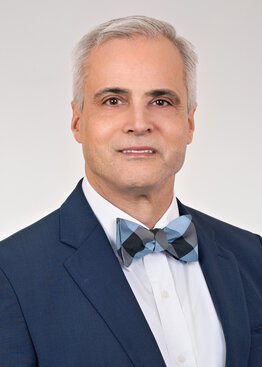
Mack H. Altman III, MSDA, serves as assistant provost for Strategic Initiatives & Communications at the Medical University of South Carolina (MUSC). In this role, he leads complex, high-impact initiatives that advance the priorities of the Provost and strengthen alignment across MUSC's academic enterprise. His work brings together executive coordination, stakeholder engagement, digital strategy, communications, marketing and operational discipline to help move strategic priorities from concept to implementation.
Altman has been charged with establishing MUSC's Office of Microcredentials, a university-level effort designed to expand access to flexible, workforce-aligned learning opportunities. Through this work, he is helping build the structure, standards, partnerships, and institutional coordination needed to support high-quality microcredential programs that respond to emerging needs across South Carolina's health sciences workforce. His approach reflects a commitment to connecting academic expertise with practical skill development in ways that serve learners, faculty, employers, and the communities MUSC supports.
Before advancing into higher education administration, Altman built more than two decades of experience in digital consulting, web development, technology strategy, data analytics, business development, and project management. His industry background includes founding and leading digital ventures, consulting with organizations on web and brand strategy, developing technology systems, guiding vendor relationships, and translating complex operational challenges into clear, actionable plans. That experience continues to shape his work at MUSC, where he focuses on building systems that improve access, usability, coordination, and long-term institutional effectiveness.
Altman holds a Master of Science in Data Analytics from Western Governors University and is pursuing a Doctor of Business Administration in Strategy & Innovation from Capella University. His academic and professional interests center on the ways strategy, technology, data, and communication can help academic health sciences institutions adapt to changing workforce needs while improving the learner's experience.