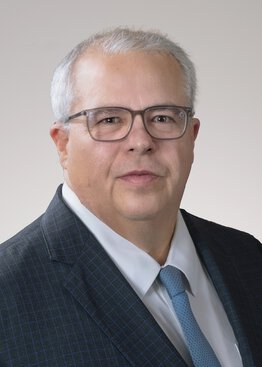
John V. Marymont, M.D., MBA, an orthopaedic surgeon and seasoned academic medical leader, is the executive vice president for Academic Affairs and provost for the Medical University of South Carolina (MUSC). He serves as the chief academic officer for the University overseeing its six colleges, education, research, innovation and AI enterprise. With nearly 25 years of executive experience at Baylor College of Medicine, Louisiana State University Health Sciences Center, and the University of South Alabama, Dr. Marymont has played pivotal roles in major healthcare transitions, academic growth, and medical education excellence.
Prior to his current position, Dr. Marymont held the roles of vice president for Medical Affairs and dean of the Frederick P. Whiddon College of Medicine at the University of South Alabama. There, he oversaw USA Health and the Frederick P. Whiddon College of Medicine and led transformative growth, including restructuring the health system, creating the USA Healthcare Authority, and expanding the clinical enterprise to more than 7,000 employees and $1.3 billion in annual revenue. Under his leadership, USA Health successfully acquired Providence Hospital and clinics, launched new residency programs, achieved full LCME accreditation, advanced a new $200 million medical education and research facility, fundraised more than $165 million, and developed new degrees in healthcare leadership and instructional design. During his tenure at LSU Health Sciences Center Shreveport, he served as chair of the Department of Orthopedic Surgery and interim dean of the Medical School. He played a key role as a leader in the privatization of the state-owned hospital system in North Louisiana. At Baylor College of Medicine, he was a tenured professor and chief of the Foot and Ankle Division within the Department of Orthopedic Surgery.
Dr. Marymont earned his undergraduate degree in Biochemistry and Molecular Biology from Northwestern University, medical degree from Vanderbilt University, orthopedic residency at The University of Texas Health Sciences Center-Houston, completed advanced orthopedic fellowships at the Cleveland Clinic Foundation and the New England Baptist Hospital. He holds an Master of Business Administration (MBA) from Rice University’s Jones School of Business. He graduated Phi Beta Kappa, was inducted as a faculty member into the Alpha Omega Alpha Medical Honor Society and was bestowed as a Jones Scholar by the business school faculty at Rice University.