
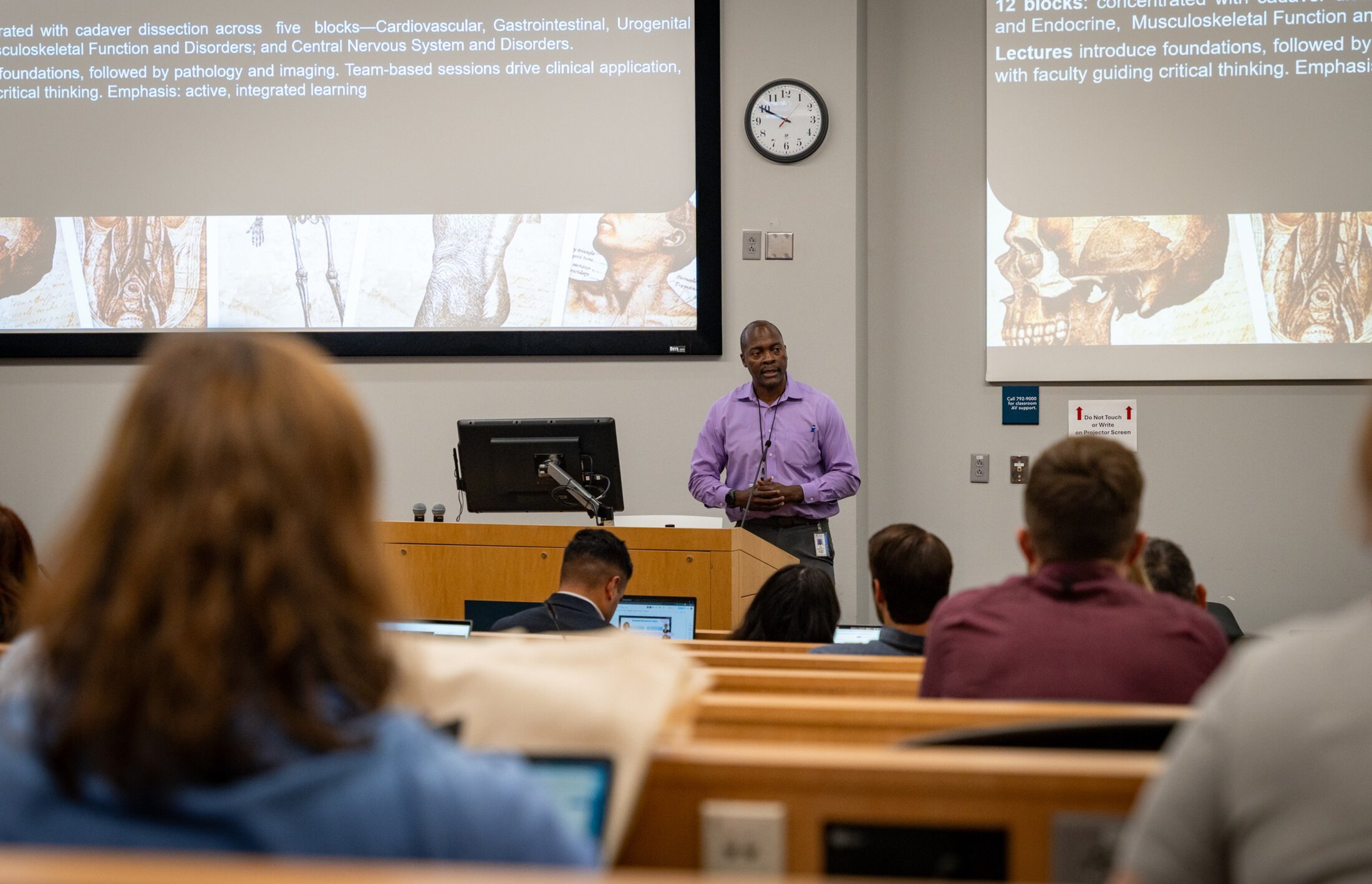
Anatomy educators from 29 institutions gathered at the Medical University of South Carolina to share how they are using Toltech software and the Sectra Table, compare approaches and learn from one another as they work to strengthen anatomy education for students preparing for careers in healthcare.
The educators came to Charleston for the 2026 Toltech User Meeting, a two-day collaborative event held June 4-5 that focused on anatomy education leveraging extended reality (XR) tools. The meeting drew participants from across the U.S. and abroad, with the farthest attendee traveling from Sweden.
The event brought together faculty, instructional leaders and health sciences educators who are integrating digital anatomy technologies into teaching and learning. Rather than a traditional conference built around passive presentations, the meeting gave attendees opportunities to exchange implementation strategies, discuss what has worked in their own programs and consider how other institutions are using similar tools to improve student learning.
MUSC served as the host site for the meeting, which centered on user education, peer exchange and practical approaches to anatomy instruction. The event gave participants opportunities to learn from institutional examples across the country while also seeing how an academic health system can support technology-enhanced learning across multiple health sciences programs.
John V. Marymont, M.D., MBA, executive vice president for Academic Affairs and provost at MUSC, opened the meeting by welcoming guests from participating institutions to MUSC and Charleston.
"At MUSC, this work began with students who came to the Provost’s Office asking for better access to human anatomy to build their confidence," Dr. Marymont said. "We listened and got to work. Through that collaboration, these tools now support seven graduate programs. That’s impact. That’s driving innovation from where you are."
That message helped frame the meeting around a central question shared by anatomy educators: How can students gain a stronger, more clinically relevant understanding of the human body before they enter patient care settings?
Students have to understand anatomy in two-dimensional cross sections because that’s what they’ll use clinically.
Across the two-day program, attendees shared how they are using virtual anatomy software, anatomy tables, XR resources and faculty-designed learning activities to help students move beyond memorization and toward deeper clinical understanding. Sessions gave participants space to compare approaches, discuss implementation challenges and consider how digital anatomy education can support student learning in medicine, rehabilitation sciences, physician assistant studies, speech-language pathology and other health professions.
While the meeting was not solely about MUSC's approach to anatomy education, the university's role as host reflected its investment in high-quality learning environments for future health professionals. MUSC presenters included faculty and staff from MUSC Libraries, the College of Medicine and the College of Health Professions, with examples spanning medicine, occupational therapy, physical therapy, physician assistant studies and speech-language pathology. Their presentations showed how anatomy education can be strengthened when faculty expertise, clinical context and technology-enhanced learning environments work together.
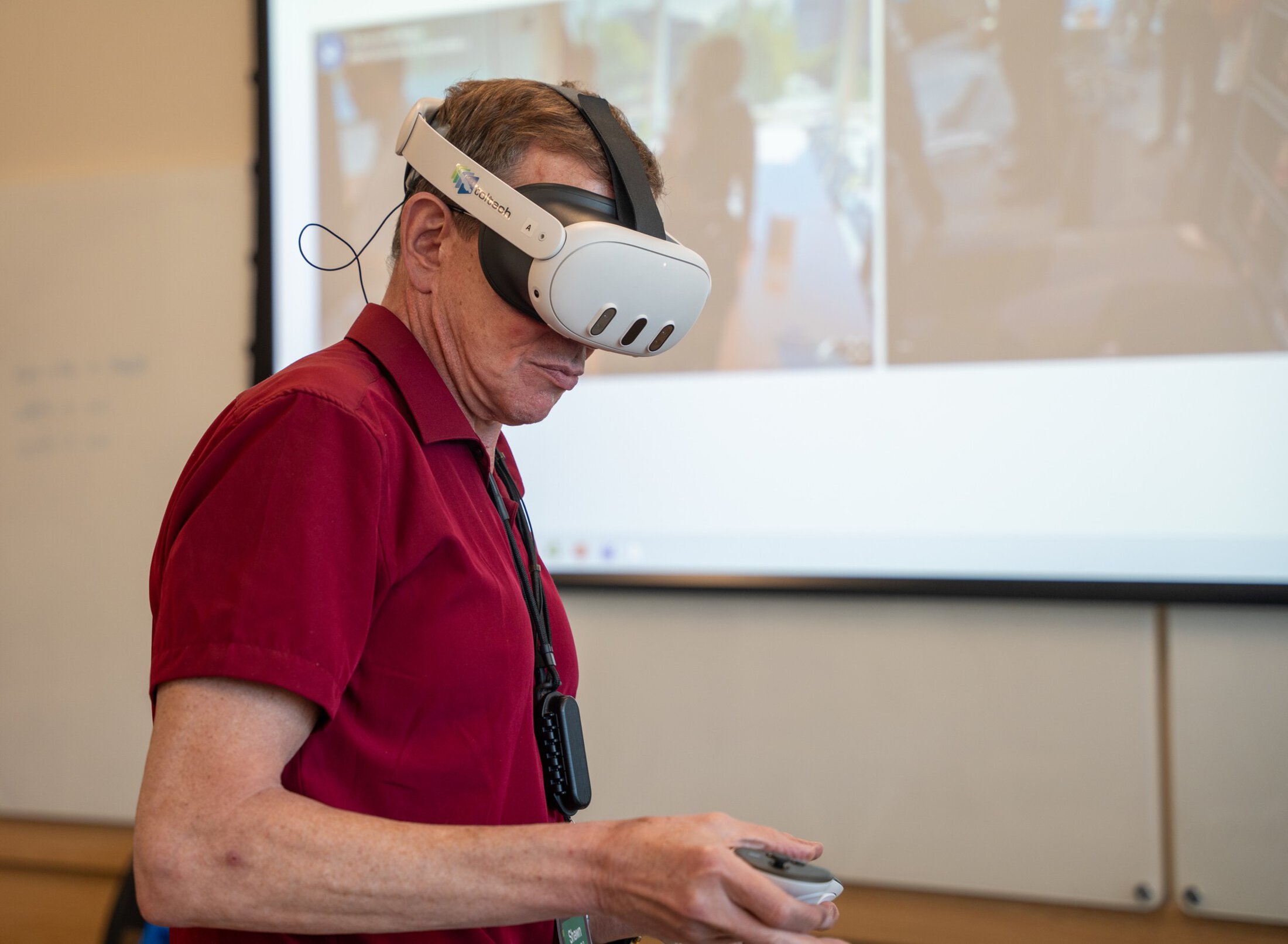
Through presentations, hands-on workshops, XR demonstrations and a tour of MUSC's virtual anatomy lab, participants explored practical ways to connect foundational anatomy with clinical reasoning, imaging interpretation and patient care.
One MUSC-specific example came during a session led by Erick Lemon, director of Digital Strategies and Innovation and assistant professor for MUSC Libraries and assistant professor, and Andrew J. Novak, operations manager of the MUSC Healthcare Simulation Center. The session showed how MUSC is exploring the integration of artificial intelligence into anatomy education, including the use of Epic Games’ MetaHuman technology within the Unreal Engine environment to support more interactive, student-centered learning experiences. Often associated with gaming, Unreal Engine is also being used to create immersive educational environments, showing how real-time 3D technology can help students engage with complex concepts in new ways.
For Joshua Stone, Ph.D., assistant program director in the Division of Physician Assistant Studies at MUSC, the value of virtual anatomy is not simply that it gives students another way to study. It helps them learn anatomy in the same visual language they will use in clinical care.
"Students have to understand anatomy in two-dimensional cross sections because that's what they'll use clinically," Dr. Stone said. "When they look at a CT, MRI or X-ray, they need to be able to say, 'I know what that is because I know my anatomy.'"
Stone said technology gives students repeated opportunities to manipulate three-dimensional anatomy, study cross-sectional images and connect what they see to physical examination, ultrasound and clinical imaging. In MUSC's fast-paced physician assistant curriculum, that applied approach helps students move quickly from foundational knowledge to clinical reasoning.
That is where educational innovation begins to change what’s possible: students are not only identifying structures, they are learning to think like clinicians.
The meeting aligned with two of MUSC’s strategic goals to drive innovation and health transformation and reshape the future workforce. As South Carolina’s only comprehensive academic health system, MUSC continues to invest in learning environments that support discovery, strengthen anatomy education and prepare students for the future of healthcare.
That commitment matters for students and families considering where to pursue a healthcare education. Anatomy remains foundational to medicine, rehabilitation sciences, physician assistant studies, speech-language pathology and other health professions. As clinical care becomes more technology-enabled, students must learn to understand the body in multiple dimensions, connect structure to function and apply what they learn to real-world clinical scenarios.
The event also highlighted how South Carolina can serve as a destination for academic innovation. By bringing anatomy educators to Charleston, the 2026 Toltech User Meeting highlighted MUSC;'s ability to host professional exchange, support collaboration and contribute to the state's growing knowledge economy. That work supports a broader public mission: preparing highly trained health professionals who can serve patients, communities and the evolving needs of the healthcare workforce.
Throughout the meeting, attendees participated in sessions on touch-table interfaces, XR systems, assessment design and multimodal lesson development. Educator-led learning labs gave participants the opportunity to experience student activities firsthand, while facilitated group discussions focused on assessment, clinical integration, curriculum design and AI-supported lesson development.
Collaboration was one of the event’s defining outcomes. Faculty from participating institutions shared how they are using digital anatomy resources to support anatomy instruction, augment traditional teaching approaches, improve spatial reasoning and prepare students for modern imaging-based practice. The international participation added to the sense that this work is part of a broader movement in anatomical education.
The success of the 2026 Toltech User Meeting was evident in its reach, engagement and purpose. Educators came together to exchange ideas, share lessons learned and strengthen a community focused on student learning. Attendees left with new strategies, stronger professional connections and a clearer view of how immersive technologies can help students learn anatomy in ways that are more active, applied and clinically meaningful.
For MUSC, hosting the meeting represented more than a successful event. It demonstrated how educational innovation can advance health transformation, strengthen South Carolina's role in academic healthcare and help prepare future clinicians to learn, practice and lead in increasingly technology-enabled care environments.

Mack H. Altman III
Assistant Provost for Strategic Initiatives & Communications University Digital Strategy Officer Executive Director, Office of Microcredentials
Mack H. Altman III, MSDA, serves as assistant provost for Strategic Initiatives & Communications at the Medical University of South Carolina (MUSC). In this role, he leads complex, high-impact initiatives that advance the priorities of the Provost and strengthen alignment across MUSC's academic enterprise. His work brings together executive coordination, stakeholder engagement, digital strategy, communications, marketing and operational discipline to help move strategic priorities from concept to implementation.
Altman has been charged with establishing MUSC's Office of Microcredentials, an enterprise-wide effort designed to expand access to flexible, workforce-aligned learning opportunities. Through this work, he is helping build the structure, standards, partnerships, and institutional coordination needed to support high-quality microcredential programs that respond to emerging needs across South Carolina's health sciences workforce. His approach reflects a commitment to connecting academic expertise with practical skill development in ways that serve learners, faculty, employers, and the communities MUSC supports.
Before advancing into higher education administration, Altman built more than two decades of experience in digital consulting, web development, technology strategy, data analytics, business development, and project management. His industry background includes founding and leading digital ventures, consulting with organizations on web and brand strategy, developing technology systems, guiding vendor relationships, and translating complex operational challenges into clear, actionable plans. That experience continues to shape his work at MUSC, where he focuses on building systems that improve access, usability, coordination, and long-term institutional effectiveness.
Altman holds a Master of Science in Data Analytics from Western Governors University and is pursuing a Doctor of Business Administration in Strategy & Innovation from Capella University. His academic and professional interests center on the ways strategy, technology, data, and communication can help academic health sciences institutions adapt to changing workforce needs while improving the learner's experience.
Recent Education stories