

For Zoher Kapasi, PT, Ph.D., work has always mattered deeply. But somewhere during his years as dean of the MUSC College of Health Professions (CHP), he found the words to describe exactly where it fits in his life.
“My work gives purpose to my life,” he said. “My family gives my life its meaning.”
The distinction is especially meaningful because Kapasi’s tenure at CHP has unfolded between two cities.
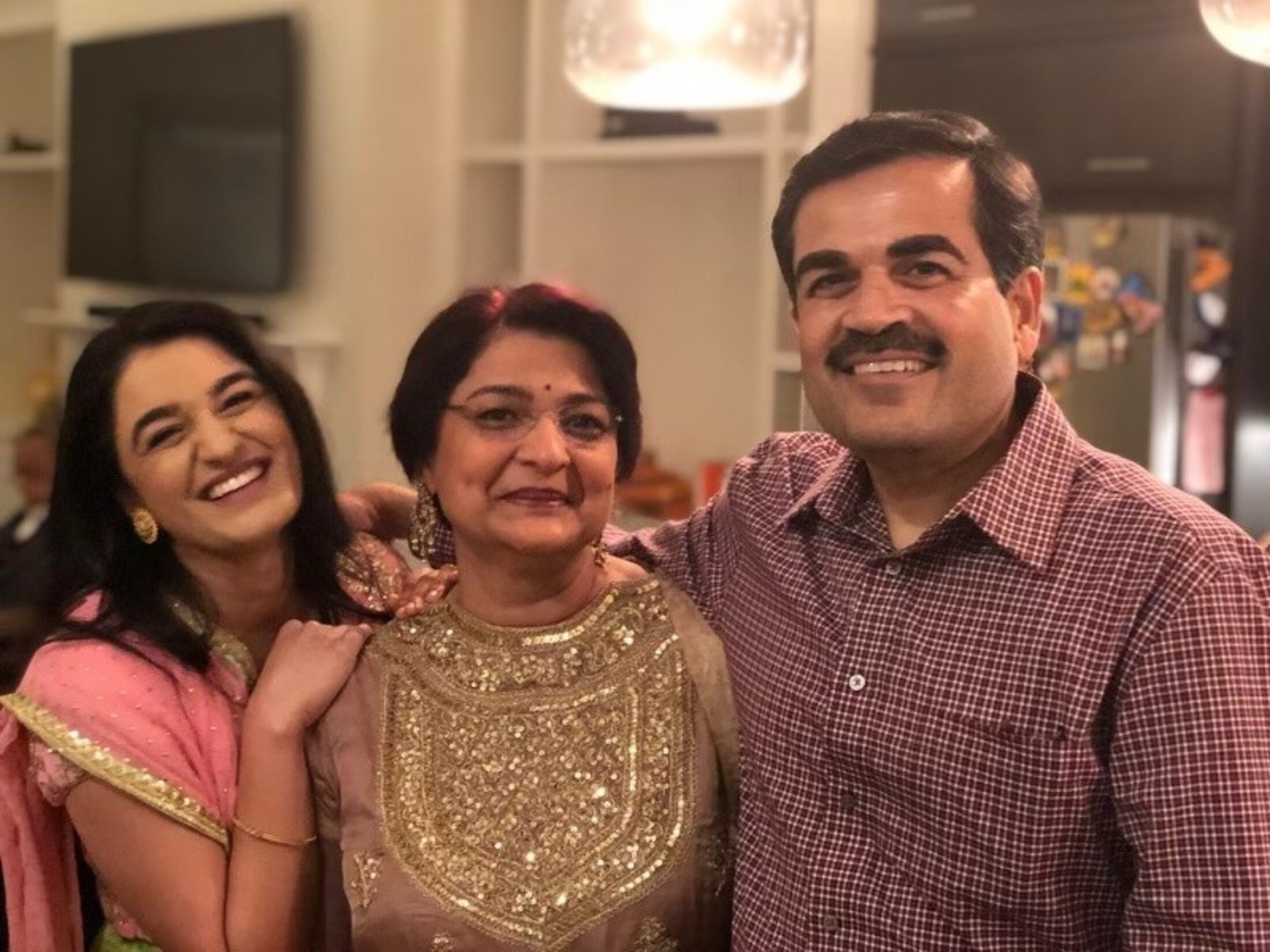
When he was first approached about becoming dean, his initial inclination was to say no. His daughter was a rising junior in high school, and he didn't think it was the right time to move his family. His wife encouraged him to consider the opportunity anyway. She knew how much he admired MUSC and told him they would make it work.
In 2018, when he became dean, his family remained in Atlanta while he moved to Charleston.
And when he arrived, Kapasi did what those who have worked with him came to expect: He asked for the numbers.
A self-described “numbers guy,” Kapasi requested several years of college financials and began studying the trends. The college was profitable and revenue was growing, but expenses were growing faster. He saw a relatively short window to change the trajectory.
“That gave me a pause, honestly,” he recalled. “I said, ‘Oh wow, I need to get going on this.’”
At the same time, something else about CHP immediately stood out to him: its people.
Coming from Atlanta, he was accustomed to Southern hospitality, but he found the warmth and collegiality at CHP to be “a notch higher.” The college he inherited had experienced people, strong processes and, in his view, the foundation needed for future growth.
“I've often said the prayer of my first three years was, ‘Don't mess this up,’” he said.
That tension, between preserving what was already special while pushing the college toward what it could become, would come to define much of Kapasi’s experience as dean.
Learning to lead change
Kapasi arrived with a sense of urgency. Throughout the interview process, he had heard that people wanted the college to grow, and the financial trends reinforced his belief that growth was necessary.
What surprised him was discovering that wanting growth and embracing the changes required to achieve it were two different things.
“Everybody wants to grow, but change is difficult,” he said. “You cannot have growth without change.”
Looking back, Kapasi considers navigating that tension one of the most important lessons of his tenure.
While data has always been a grounding point for him, experience taught him that data alone isn't enough. Leadership also requires understanding how people experience change.
“I like to think I've become a better listener,” he said.
If he could talk to the version of himself who first arrived at CHP, Kapasi said he might tell him to take a little more time and not approach those early years with quite as much urgency. Still, he doesn't spend much time second-guessing the decisions he made and views the experiences as part of the learning process.
He learned another lesson along the way: Leadership isn't a popularity contest.
“You will not make everybody happy,” he said. “And you should be OK with that.”
What matters more to him is whether people felt they were heard and treated fairly. As he prepares to leave, Kapasi said he hopes even those who disagreed with his decisions felt he listened and that they understood why a decision was made.
My work gives purpose to my life. My family gives my life its meaning.
Purpose in Charleston, meaning in Atlanta
While Kapasi was adjusting to life at CHP, he and his family were also navigating life in two cities.
During the demanding early years, there were some unexpected advantages to the arrangement. Kapasi describes himself as an introvert, despite the outgoing personality many at CHP know, and evenings alone gave him time to recharge. When he returned to Atlanta on the weekends, he was intentional about devoting his time to his family. Over time, however, the distance became harder.
The travel grew tiring, and some evenings, the prospect of returning to an empty apartment weighed on him.
The experience helped crystallize something he had long understood but had never quite articulated. He loved his work. It gave him purpose. But without his family, he realized, even the work he found deeply meaningful could feel empty.
“My work gives purpose to my life,” he said. “My family gives my life its meaning.”
The accomplishment that matters most
Ask Kapasi about CHP's progress during his tenure and numbers will inevitably enter the conversation.
But ask what makes him proudest, and his answer isn't ultimately about numbers.
It's about people.
“When I see people grow,” he said. “To me, that's the biggest thing as a leader you do.”
He points to faculty earning promotion and tenure and staff members progressing in their careers. He also keeps the cards and notes people have sent him over the years, particularly those telling him that his support, or the college's support, helped them do something they hadn't imagined they could do.
Students have written to him, too. Some had little interaction with their dean beyond hearing him speak at orientation, but later told him something he said had changed their thinking.
Those moments have stayed with him.
As dean, Kapasi may have been the person at the podium and the public face of the college, but he is quick to redirect credit to the faculty and staff doing the work. Their talents, he said, made the college better than he sometimes could have imagined.
For Kapasi, that is at the heart of what leadership should accomplish.
“As leaders, what we provide is an environment for people to flourish,” he said. “And seeing that growth is one of the things that gives me the greatest sense of pride.”
A new path
So why leave a job that Kapasi describes as one of the best he has ever had?
In part, because he believes there is value in knowing when it's time.
Kapasi said he has always wanted to leave a leadership position while people are asking, “Why are you leaving?” rather than “Why not?” More importantly, he had begun to feel that he had accomplished much of what he came to CHP to do and that the college was ready to benefit from the fresh ideas of another leader.
He also felt he had “one more stint” in him.
A quote from Ralph Waldo Emerson has helped guide Kapasi throughout his life: “Do not go where the path may lead. Go instead where there is no path, and leave a trail.”
Creating new paths, Kapasi said, is something he has always been drawn to.
Now, another one awaits him as Provost at Thomas Jefferson University.
But when Kapasi reflects on the path that brought him to this moment, he returns less to programs, finances or statistics than to the people who traveled it with him.
He talks about faculty and staff whose talents exceeded what he could have imagined, the students whose notes he has saved, the colleagues he leaned on and the laughter they shared along the way.
“It’s been just a joyful ride,” he said.
Recent College of Health Professions stories