CATL Summer Programming

Register here for Summer Series.

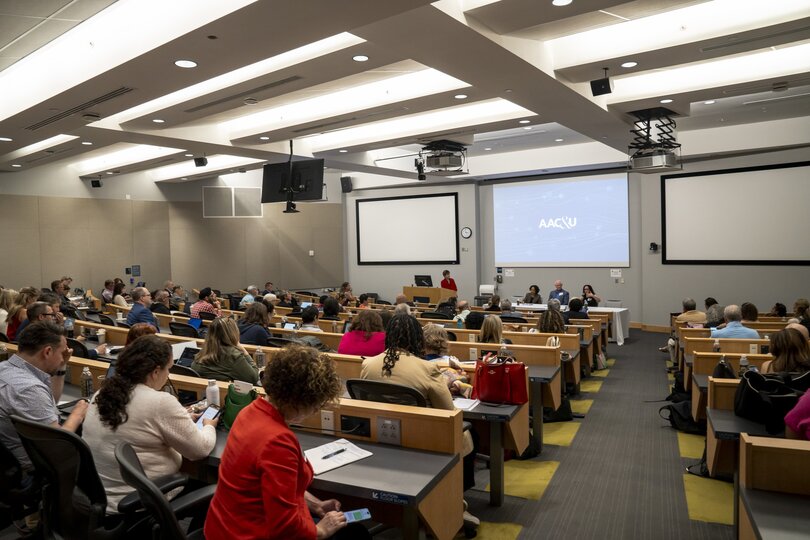
The Center for the Advancement of Teaching & Learning invites you to our 2026 Summer Series focused on competency-based education. This year’s theme, Building Competence Together, highlights the collaborative work of designing meaningful learning, assessment, and growth experiences at MUSC. Across four one-hour sessions, participants will explore practical strategies related to rubrics, Entrustable Professional Activities (EPAs), data-informed decision making, and artificial intelligence in the CBE space. Each session can stand alone while collectively building a stronger foundation for competency-based education implementation. Register today to join our Summer Series Team and receive calendar holds for all events. We cannot wait to engage in conversation and connect with colleagues advancing this work together! If you have any questions, please reach out to Julia Liebenrood at rowlanju@musc.edu.

Register Now

The Competency Conversation

In this episode of The Competency Conversation, Dr. Rachel Penrod-Martin shares her perspective on advancing competency-based education within graduate and biomedical science programs. Focusing on the current work of defining program-level outcomes and objectives, she discusses how institutions can establish structured, iterative processes for curriculum review that support continuous improvement. She highlights the importance of providing clear resources and guidance to foster faculty engagement and build meaningful buy-in across programs, while emphasizing the value of making expectations explicit through well-defined competencies. Dr. Penrod-Martin also reflects on how this approach empowers learners to take greater ownership of their education, while encouraging ongoing, institution-wide conversations about how competencies translate into real-world practice.

Listen now


In The Competency Conversation, Renee Connolly PhD explores how competency-based education is shaping the way physicians are trained within complex healthcare systems. From defining expectations to assessing performance in real clinical environments, she outlines how a competency-driven approach supports learner growth, consistency across programs, and readiness for independent practice.

Listen Now

In this episode of The Competency Conversation, Dr. Candi Jump and Dr. Keshia Craig from the Pediatric Residency Program share their early experiences implementing competency-based medical education within a clinical training environment. They reflect on how Entrustable Professional Activities (EPAs) are shaping the way residents are evaluated, with a growing emphasis on real-time, actionable feedback and the progression toward independent practice. The conversation highlights both the challenges and opportunities of this transition—from supporting high-achieving learners as they navigate growth areas, to helping faculty adapt to more frequent, practice-based assessment. Grounded in their shared commitment to preparing residents to deliver high-quality patient care, this episode offers a candid and thoughtful look at building competency in a complex, fast-paced clinical setting.

Listen Now

In this episode of The Competency Conversation, Dr. Teresa Stephens from the College of Nursing shares her perspective on how competency-based education is shaping the future of nursing. Focusing on the connection between classroom learning and clinical practice, she explores how clearly defined competencies, authentic assessment, and hands-on experience help ensure learners are prepared to meet the demands of patient care. This conversation highlights the critical role CBE plays in developing confident, practice-ready nurses.

Listen Now

In this episode, we’re joined by Dr. Eric Richardson, Nikki Strawn, and Katie Lamb from the College of Health Professions, who share a collaborative, multi-level perspective on implementing competency-based education across healthcare leadership programs. Together, they explore how aligning competencies across curriculum, assessment, and instructional design supports meaningful, measurable learning, while also highlighting the role of data in driving continuous improvement. The conversation emphasizes a shift from traditional grading toward understanding what learners can do in practice, and how faculty are being supported through this transition. From breaking down silos across courses to fostering deeper conversations about purpose and assessment, this episode offers a candid look at both the complexity and the rewarding impact of building a more intentional, competency-aligned learning environment.

In this episode of The Competency Conversation, Leslie Morris offers a systems-level view of competency-based education at the intersection of technology, data, and clinical training. Drawing from her work supporting residents and fellows, she explores how clearly defined competencies, milestones, and Entrustable Professional Activities (EPAs) are shaping how performance is observed, assessed, and ultimately trusted in practice. Leslie also highlights the role of technology platforms and data in telling a more complete story of learner development, while emphasizing the importance of meaningful, actionable feedback over generic evaluation. As the conversation turns toward artificial intelligence, she reflects on how emerging tools are influencing both teaching and assessment, and the need for thoughtful integration grounded in strong educational principles. This episode offers a forward-looking perspective on how innovation, clarity, and collaboration can strengthen competency-based education in complex clinical environments.

If you have any questions about our Summer Series, please reach out to Julia Liebenrood. We look forward to connecting, creating, and collaborating with you all soon!

Past Programs Archive

Find all of our past programming on the MUSC Horseshoe. (MUSC Net ID and password required).

View More