1
00:00:02,840 --> 00:00:06,840
[Auto-generated transcript. Edits may have been applied for clarity.]
Narrator: Welcome to the Competency Conversation Designing and Assessing Health Care Leadership
2
00:00:07,320 --> 00:00:11,520
programs presented by the MUSC Center for the Advancement of Teaching and Learning,
3
00:00:11,880 --> 00:00:25,640
and the team at the Learning Curve Podcast. Welcome back to the Competency Conversation.
4
00:00:26,360 --> 00:00:28,000
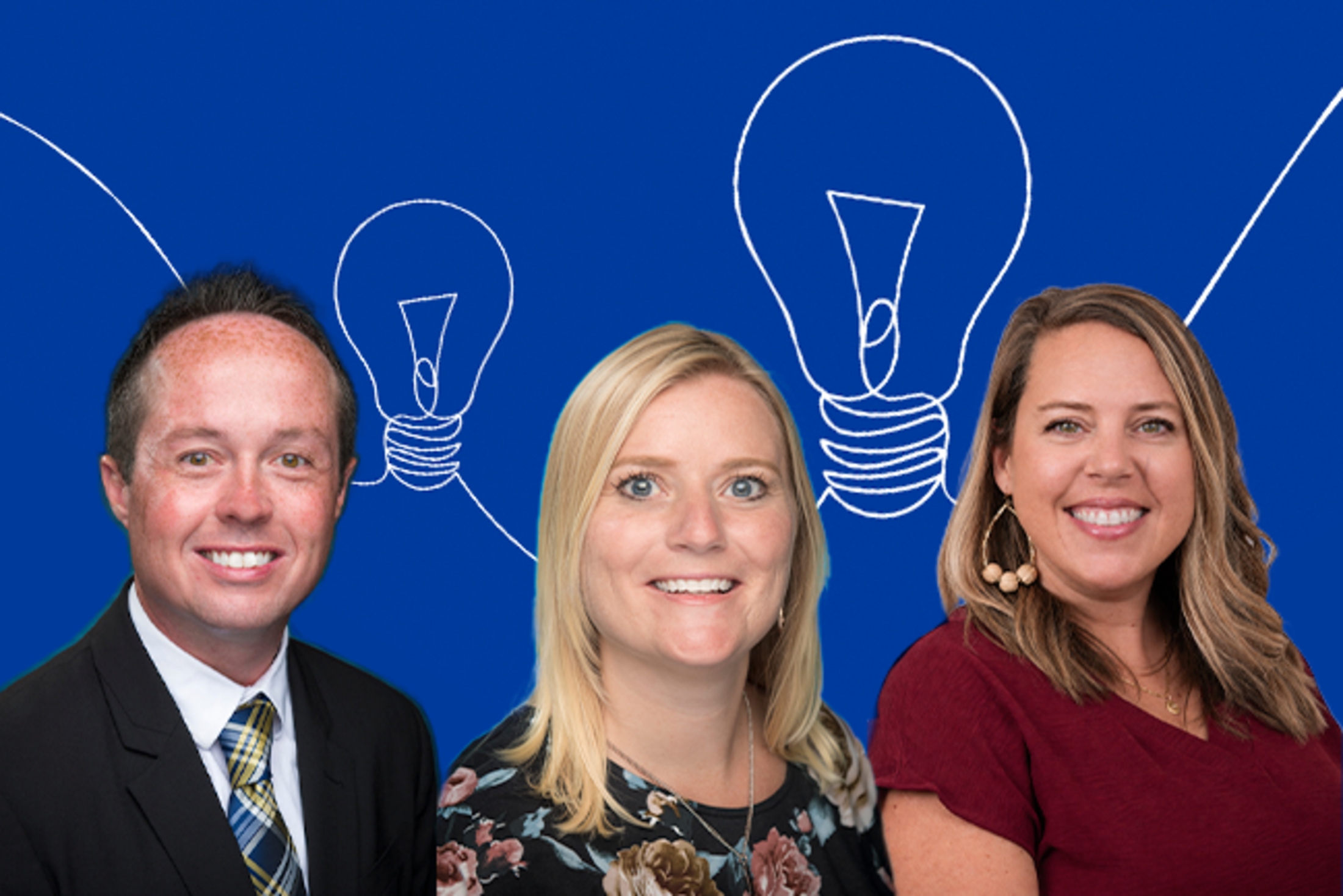
Julia Liebenrood: Today we're joined by Doctor Eric Richardson,
5
00:00:28,680 --> 00:00:32,720
chair and professor in the Department of Healthcare Leadership and Management within the College of Health Professions.
6
00:00:33,920 --> 00:00:36,840
Nikki Strong, Curriculum and assessment coordinator within the same department.
7
00:00:37,480 --> 00:00:40,800
And Katie Lamb, instructional designer and instructor for the College of Health Professions.
8
00:00:41,640 --> 00:00:47,240
Together, they bring a combined perspective spanning leadership, curriculum design, assessment, and instructional strategies.
9
00:00:48,080 --> 00:00:52,640
In this episode, we'll explore how competency based education is being applied across health care leadership
10
00:00:53,080 --> 00:00:56,720
programs and how intentional curriculum and design practices support meaningful,
11
00:00:57,240 --> 00:01:00,380
measurable learning outcomes. Welcome, everyone.
12
00:01:02,060 --> 00:01:05,980
Good morning. Hi. To get us started, we'd love to hear from each of you.
13
00:01:06,300 --> 00:01:11,940
Can you each share a bit about your roles and how your work connects to competency based education within the College of Health Professions?
14
00:01:12,580 --> 00:01:15,740
And Eric, I'll let you start us off. Eric: Sure. Thank you.
15
00:01:16,620 --> 00:01:20,340
So as we mentioned earlier, my role is as chair of the department.
16
00:01:21,660 --> 00:01:27,620
And so my focus really is on spearheading and coordinating the efforts related
17
00:01:28,220 --> 00:01:33,420
to converting a lot of our programs and whether they be new or existing,
18
00:01:34,540 --> 00:01:43,500
uh, into, uh, competency aligned frameworks where we have better measurement systems for not only our programmatic assessment,
19
00:01:44,140 --> 00:01:53,020
but also for our assessment, for our, you know, university related accreditation and specialty accreditors.
20
00:01:54,484 --> 00:01:59,604
Nikki: And I can go next. Um, I am the curriculum and assessment coordinator for the program.
21
00:02:00,124 --> 00:02:06,284
So, um, I am deeply entrenched in the competencies that we're using to make sure they are
22
00:02:06,564 --> 00:02:11,164
aligned across the program and that we're mapping them at the appropriate levels.
23
00:02:11,644 --> 00:02:13,644
So they're scaffolded across the programs.
24
00:02:14,964 --> 00:02:23,364
Um, also, um, looking at how what technologies we can use in the LMS to make sure that is clear to the learners and the instructors.
25
00:02:24,884 --> 00:02:33,004
Um, and also looking at how to, um, upskill and train our faculty in the best practices with competency based education.
26
00:02:34,164 --> 00:02:37,844
Um, particularly in grading, um, and so forth.
27
00:02:38,124 --> 00:02:41,604
And I work closely with Eric and Katie on both sides of that.
28
00:02:42,124 --> 00:02:48,884
Um, Katie, with kind of the technology and design course of it. And then Eric, on the more administrative aspects of rolling out CBE.
29
00:02:50,871 --> 00:03:02,591
Yep. Katie: And adding to what Nikki said, I, um, partner a lot with Nikki on what the alignment and the strategies to build those rubrics and everything,
30
00:03:03,111 --> 00:03:09,431
but also on the tech side, I'm helping build it out in the bright space courses, um, for faculty and learners.
31
00:03:10,956 --> 00:03:14,276
Wonderful. Thank you all so much for sharing a little bit about the work that you all are doing.
32
00:03:14,836 --> 00:03:22,156
I'd love to hear, at least from one of you. Um, what sparked your interest in CBE and what brings you joy within working with this, um, rollout?
33
00:03:24,116 --> 00:03:32,516
Sure. I'll be happy to, to start off with this one. So, um, you know, I really became interested in competency based or competency aligned education,
34
00:03:33,916 --> 00:03:37,796
um, when working with one of our specialized accreditors for our MHA programs,
35
00:03:38,596 --> 00:03:44,556
which is what we refer to as Cami, uh, which is the Commission for Accreditation of Healthcare Management Education.
36
00:03:45,976 --> 00:03:53,936
Um, and, you know, we're really focused on trying to determine whether students are prepared for their professional practice,
37
00:03:54,496 --> 00:04:03,776
not just about course completion. And so oftentimes people think about, uh, completing courses, uh, you know, in the context of, uh, you know,
38
00:04:03,936 --> 00:04:10,696
traditional grades and traditional grades, often telling students, um, you know, what they know, but that's not necessarily true.
39
00:04:11,616 --> 00:04:18,456
Uh, when we're thinking about real world, uh, situations, uh, that require, you know, applied learning.
40
00:04:19,576 --> 00:04:27,416
Um, and obviously we talk often about how the students that we serve in our programs are all coming from very diverse backgrounds,
41
00:04:28,096 --> 00:04:36,536
and they're all ending up in very diverse destinations. And so, uh, we're having to meet a lot of, uh, different needs, uh, for different individuals.
42
00:04:37,416 --> 00:04:42,576
So, um, our work here, I like to frame this around.
43
00:04:42,936 --> 00:04:48,606
We often have, conversations around this concept of of of precision based learning.
44
00:04:49,206 --> 00:04:55,006
So if you think about precision based medicine, it's kind of the same kind of thought process applied to learning.
45
00:04:55,326 --> 00:05:05,566
And that's where we can focus in on the ability of our or our ability to use competency data from our courses and our programs to
46
00:05:05,726 --> 00:05:13,086
better understand and support each of these students developmental needs as they progress from the beginning of their program,
47
00:05:14,006 --> 00:05:20,726
uh, to the end of their program. And, you know, in their current career trajectory towards the future, you know, goals and outcomes.
48
00:05:24,006 --> 00:05:27,326
Thank you. And you actually segue perfectly into my next question, which was for Nicki.
49
00:05:27,966 --> 00:05:34,086
When you guys are looking at data, what data is most important and meaningful to your team and how do you guys utilize that data?
50
00:05:35,886 --> 00:05:44,026
Yeah, sure. Um, so obviously we have signature assessments where we're looking at how students are
51
00:05:44,226 --> 00:05:48,546
performing on specific competencies at a specific point in time in the curriculum,
52
00:05:49,906 --> 00:05:55,826
and we are introducing them across the spectrum of, um, introduced, reinforced and mastered.
53
00:05:56,506 --> 00:06:00,466
And so when you were looking at the data, it's important to see, okay,
54
00:06:00,786 --> 00:06:09,586
how are the students performing on our introduced level signature assessments and how that's feeding into their reinforced level up into the mastery.
55
00:06:10,186 --> 00:06:17,026
So for example, if we notice at the introduced level, um, they're performing at a low level, um,
56
00:06:17,226 --> 00:06:22,266
that lets us know, hey, something we need to do something when we're introducing this competency skill.
57
00:06:22,826 --> 00:06:28,186
Um, we're not, you know, maybe introducing it. Right, or it needs some more, um, scaffolding there.
58
00:06:28,786 --> 00:06:32,026
Um, conversely, you might have it there performing well on the introduce reinforced.
59
00:06:32,746 --> 00:06:39,626
And then when they get to mastery level, um, some things, you know, they're not performing as high or, you know, they're below the average.
60
00:06:40,106 --> 00:06:47,166
They're. And so we can take a look at is it something with the mastery assessment or are we missing a piece in the
61
00:06:47,326 --> 00:06:52,086
introduced and reinforced that should be there to help support that task and the mastery assessment?
62
00:06:53,246 --> 00:06:59,846
Um, and so yeah, that um, really helps us take a look at our gaps where, um,
63
00:07:00,286 --> 00:07:06,286
students are performing and how we can make our curriculum stronger in those particular areas where we're introducing,
64
00:07:06,886 --> 00:07:14,166
reinforcing or mastering it across the curriculum. And then Katie or Eric, if you guys want to follow up,
65
00:07:14,486 --> 00:07:20,646
what are some ways that the curriculum has changed, um, for your faculty members because of this work?
66
00:07:22,846 --> 00:07:32,686
Sure. I'll be happy to take that one. I think the biggest shift for faculty, um, is really, um, you know, changing the way that they think about, uh,
67
00:07:32,886 --> 00:07:39,756
braiding and assessment and their courses as well as, um, moving into a mindset of continuous improvement.
68
00:07:40,476 --> 00:07:47,116
So we talk a lot about how this data can be used to support improvement rather than compliance.
69
00:07:48,076 --> 00:07:54,796
So, um, you know, oftentimes conversations around accreditation or assessment is all about compliance.
70
00:07:55,956 --> 00:08:03,276
Um, but we're really trying to to shift the culture and the thought process about how it is that we can learn from each course
71
00:08:03,756 --> 00:08:10,236
and from the aggregate over time about how our students are performing and how that data helps us to become better faculty,
72
00:08:10,956 --> 00:08:13,516
better teachers, and produce better outcomes.
73
00:08:14,036 --> 00:08:21,036
Because that data is going to help us to be able to pinpoint specific areas where students are struggling consistently.
74
00:08:22,396 --> 00:08:27,916
Um, it's also going to help us to be able to, uh, break down silos, uh,
75
00:08:28,116 --> 00:08:32,516
between curricular areas and get people to think more holistically about how
76
00:08:32,836 --> 00:08:38,096
it is that they are contributing to the larger whole of an academic program.
77
00:08:39,336 --> 00:08:42,496
Um, and then from a longitudinal standpoint, this data.
78
00:08:42,816 --> 00:08:53,016
Helps to support and again, from this continuous improvement culture, um, us to be able to think about, uh, longitudinal competency, uh, and,
79
00:08:53,496 --> 00:09:02,336
and how it is that students change over time and then how we can meet again workforce expectations as that also shifts and changes over time.
80
00:09:03,852 --> 00:09:13,092
To add to that, I think the faculty mindset is also switching from did the students complete this assignment and turn it in on time,
81
00:09:13,412 --> 00:09:17,052
and what grade did they get to more of? Can they perform this skill?
82
00:09:17,692 --> 00:09:23,612
Are they competent and able to perform this skill in a real world experience outside of the program?
83
00:09:25,231 --> 00:09:32,211
So that shift for faculty mindset is important. Are there any other misconceptions that you guys have run into throughout this process.
84
00:09:34,451 --> 00:09:36,851
Um, I think that the biggest thing is.
85
00:09:37,051 --> 00:09:43,811
Again, it's it's provided a good opportunity for training, uh, and clarification around what it means to assess learning outcomes,
86
00:09:45,011 --> 00:09:52,011
uh, what it means to assess learning outcomes at the targeted level appropriate for the type of student.
87
00:09:52,571 --> 00:09:58,291
And also, as Nicky referenced earlier, when we're thinking about Irma mapping, um, at the, you know,
88
00:09:58,451 --> 00:10:07,531
particular point in the curriculum at a specific, you know, level that needs to be demonstrated to, to see that the student is progressing.
89
00:10:08,331 --> 00:10:13,531
So I think that, again, um, you know, there's a lot of great teaching taking place.
90
00:10:14,451 --> 00:10:17,731
Uh, lots of our programs in the department are very long standing programs.
91
00:10:18,811 --> 00:10:24,131
Uh, but this is a really great opportunity for us to really zero in on how it is
92
00:10:24,251 --> 00:10:27,931
that we can use some of these best practices and competency aligned learning,
93
00:10:28,451 --> 00:10:35,761
competency based education, uh, to really be able to again focus on learning from a precision based standpoint.
94
00:10:37,813 --> 00:10:47,053
Thank you. All right. The next thing I wanted to ask about is just the transition to CV is definitely impacting your students, your faculty.
95
00:10:47,373 --> 00:10:48,533
You guys have hit on that a little bit.
96
00:10:48,973 --> 00:10:56,253
Katie, from your point of view as an instructional designer, how does that change how you approach faculty, how you're able to support them?
97
00:10:56,573 --> 00:11:00,773
Because this is a shift and it's not just within this one program.
98
00:11:01,293 --> 00:11:08,613
You guys are going to be scaling this through other programs. So how do you see that in your role in the future, how you're going to support faculty?
99
00:11:10,373 --> 00:11:15,973
Um, I have found that my conversations with faculty, um, have gotten a little deeper,
100
00:11:16,493 --> 00:11:26,293
and I'm able to ask better questions about why an assignment is important and asking the why behind what they're asking their students to do.
101
00:11:26,773 --> 00:11:30,793
And I think not just necessarily to get an answer from them,
102
00:11:31,073 --> 00:11:39,833
but for them to start reflecting on why am I asking students to take this multiple choice quiz and also asking other questions like,
103
00:11:40,033 --> 00:11:46,513
is there a better way to assess students abilities than just this quiz or just this discussion prompt?
104
00:11:47,273 --> 00:11:50,433
So my conversations have shifted a little bit with faculty.
105
00:11:53,353 --> 00:11:58,273
I can imagine. So, um, just all of this is new and different for all of them.
106
00:11:58,513 --> 00:12:01,913
So it's, um, takes a village to, to get this process rolling.
107
00:12:02,793 --> 00:12:08,593
Um, what, any of you guys care to jump in and tell me a little bit about the faculty buy in and how that process has gone?
108
00:12:09,353 --> 00:12:11,873
Um, with getting folks on board and their understanding.
109
00:12:13,033 --> 00:12:17,593
You talked about training, Eric, but how have you guys been able to support your faculty through this?
110
00:12:17,993 --> 00:12:27,013
And what's the buy in been? Sure. Uh, you know, again, I, I think it would be important for us to to mention that this is is not an easy process.
111
00:12:28,293 --> 00:12:36,853
Uh, it is very challenging. Um, you know, there's a lot of, uh, of challenging norms and and, again, clarifying misconceptions.
112
00:12:38,613 --> 00:12:47,773
Um, and so again, Mickey and Katie and I talk about often how the best way to establish a plan and the best way to really, um,
113
00:12:48,533 --> 00:12:55,213
you know, increase the probability of success and sustainability is to get faculty involved from the, from the forefront.
114
00:12:55,813 --> 00:13:04,973
And so, um, many of these efforts, again, that we've undertaken so far have started with, uh, you know, the division director level, uh,
115
00:13:05,133 --> 00:13:11,853
pulling the division director and discussing kind of, again, some of the things that we're looking at from a program quality standpoint.
116
00:13:13,173 --> 00:13:16,013
Uh, or areas for improvement standpoint at the program level.
117
00:13:16,613 --> 00:13:24,523
And then, uh, again, bringing faculty alongside as we begin to, uh, roll out, uh, revised versions of the courses.
118
00:13:25,763 --> 00:13:30,603
Um, and, you know, um, that has has been also a little.
119
00:13:30,843 --> 00:13:37,083
Bit different, just based on each person's experience with, you know, competency based education and learning frameworks.
120
00:13:38,163 --> 00:13:45,363
Uh, you know, some people are farther along than others, uh, in terms of their understanding of what competency around learning looks like.
121
00:13:46,363 --> 00:13:51,763
Um, others are more in the infancy phase, uh, or stage of knowing.
122
00:13:52,883 --> 00:13:58,323
Um, but, you know, even for those that have been in the infancy stage, um, at the after,
123
00:13:58,643 --> 00:14:08,643
they really get involved in the process and begin to understand kind of how how it is that this operates, the why behind what we're doing.
124
00:14:09,523 --> 00:14:17,563
Um, I feel like that many of those individuals have began to, uh, you know, fully embrace this process and better understand,
125
00:14:18,803 --> 00:14:23,743
kind of like, again, this focus that, you know, what the larger outcome was some that looked like.
126
00:14:25,503 --> 00:14:33,543
And I'll chime in to what's helped a lot with buy in is, um, we were fortunate enough to have doctor Jean Gordon, who couldn't join us today,
127
00:14:33,823 --> 00:14:41,623
but, um, she has experience with CBE and she was our first, um, quote unquote guinea pig with getting this rolled out.
128
00:14:41,823 --> 00:14:47,743
So the a program, um, we've been able to use a lot of what we created for it.
129
00:14:47,943 --> 00:14:55,263
And with doctor Jean Gordon as examples to show the next set of programs that we're working with.
130
00:14:55,623 --> 00:15:02,183
And so, um, that's been super helpful to show them, hey, let's show you what this looks like when it's fully developed out in a course.
131
00:15:02,823 --> 00:15:07,063
Let's show you how students will interact with it. Let's show you what it looks like from an instructor view.
132
00:15:07,903 --> 00:15:13,103
Um, and so that's been super helpful, um, to, to roll it out across various programs.
133
00:15:13,703 --> 00:15:20,303
But, um, as Eric mentioned, there's many, you know, many people involved in many of the programs at different various levels.
134
00:15:20,703 --> 00:15:28,243
And so it's been helpful that we have this kind of first set of courses to one learn from and then two to pull examples from,
135
00:15:28,603 --> 00:15:33,123
to show them realistically what it looks like and how you're going to utilize it.
136
00:15:33,883 --> 00:15:35,683
Um, you know, it's a lot of moving parts.
137
00:15:35,963 --> 00:15:42,203
So we haven't fully implemented our, um, faculty training yet because we're just trying to get it up and going.
138
00:15:42,683 --> 00:15:49,123
And so, um, eventually we'll get some more robust faculty training around what CB is.
139
00:15:49,923 --> 00:16:00,043
CB is for our programs and how we expect or, um, best practices for utilizing this competency based framework, um, etc..
140
00:16:01,102 --> 00:16:01,862
Perfect. Thank you.
141
00:16:02,462 --> 00:16:11,022
Um, yes, Eric, we have heard from almost everybody that we've interviewed that this is a complicated, complex, gruesome project to work on.
142
00:16:11,742 --> 00:16:15,102
Um, a lot of folks have shared that it was worth the work.
143
00:16:15,342 --> 00:16:16,732
So works. I know you guys are fully in the trenches,
144
00:16:17,172 --> 00:16:21,932
but hopefully you guys can see the light at the end of the tunnel and that it'll all be worth it once you get to the other side.
145
00:16:22,212 --> 00:16:29,532
It sounds like from what Nikki was sharing, you guys are able to use what you've learned from one project and and take it over to a different program,
146
00:16:29,892 --> 00:16:35,332
which I think is helpful and will hopefully, um, you know, minimize the headaches as you move forward.
147
00:16:36,332 --> 00:16:43,452
But it is it's work to, to revamp everything. And it does take a lot of folks that are on the ground and doing the work.
148
00:16:44,252 --> 00:16:50,852
Um, so we recognize that. And your sentiment has been shared amongst the other folks that we have chatted with over the last few weeks.
149
00:16:52,112 --> 00:16:58,032
Um, moving to the next, um, part, maybe a little bit on the happier side.
150
00:16:58,312 --> 00:17:03,912
What are some unexpected wins that you guys have seen? Because we've also heard that there's been some of those too.
151
00:17:04,152 --> 00:17:06,992
So what are some positive things that have come out from this transition?
152
00:17:08,767 --> 00:17:18,747
I think at a departmental level, I think some of the wins for me is, again, uh, those, um, you know, the ability to start to see excitement,
153
00:17:20,067 --> 00:17:29,987
uh, from faculty who are, who are really beginning to understand, uh, what competency based education, uh, and Alonzo learning looked like.
154
00:17:30,947 --> 00:17:40,267
Um, and who are, you know, again, uh, I think one of the most rewarding things is when you, when you start to see the creativity, um, start to,
155
00:17:41,107 --> 00:17:50,307
uh, play out as people have discussions with us, um, you know, it gets people thinking about, uh, you know, how could we do this innovatively?
156
00:17:51,747 --> 00:17:56,027
Uh, what ways could we, you know, deliver this curriculum in a in a different manner?
157
00:17:56,827 --> 00:18:00,507
Uh, that's going to really provide added value to our students here at USC.
158
00:18:01,747 --> 00:18:07,587
Um, and for me, that that's one of the biggest and most rewarding things, I think, for the student side of things.
159
00:18:08,627 --> 00:18:16,847
Um, the student's piece of being able to to better also understand what it means to be in a competency aligned program.
160
00:18:18,207 --> 00:18:21,727
Um, we talk often about how, you know, we have these competency models.
161
00:18:22,727 --> 00:18:24,407
Uh, we have these competency descriptions,
162
00:18:25,487 --> 00:18:36,367
but oftentimes there's a disconnect between what it is that we're sharing in a student's understanding of what it is that they're engaged in.
163
00:18:36,607 --> 00:18:44,327
Like, do they really understand the competency model? Do they really understand what it is that they're working on and how it how that, you know,
164
00:18:44,607 --> 00:18:49,847
competency or set of competencies play out in, you know, the current or future workplace?
165
00:18:50,407 --> 00:18:52,447
And so for me, that's the rewarding pieces.
166
00:18:52,927 --> 00:19:00,247
And the early wins for us is to be able to hear those positive stories from faculty or students, um, just related to this new experience.
167
00:19:01,915 --> 00:19:08,305
And I'll chime in to say, um, I think the wind that I've seen and it's slowly getting there,
168
00:19:08,505 --> 00:19:14,545
but especially with the MHA, is kind of a breakdown of some of the faculty silos.
169
00:19:15,025 --> 00:19:18,985
You can see when it's, you know, traditional based courses, um,
170
00:19:19,265 --> 00:19:24,265
and particularly with the process of trying to map competencies across the entire program,
171
00:19:25,425 --> 00:19:29,705
um, so that you're having to talk about, well, how are you introducing this in your course?
172
00:19:30,105 --> 00:19:33,825
How are you reinforcing it in your course? How are you mastering it in this course?
173
00:19:34,105 --> 00:19:42,105
You know, so having an understanding of I'm not just designing my course, I'm designing a program and um,
174
00:19:42,465 --> 00:19:47,345
and understanding how that and how each of their courses interact with each other,
175
00:19:48,425 --> 00:19:57,265
um, and seeing some of those aha moments with, um, you know, breaking down some of those silos that can happen in traditional based courses.
176
00:19:58,451 --> 00:20:02,331
And Katie, I know you shared the win of just going a little bit deeper with faculty and being
177
00:20:02,531 --> 00:20:07,171
able to have some more pedagogical conversations and questions thrown their way.
178
00:20:07,851 --> 00:20:09,331
Are there any other wins from the ID side?
179
00:20:10,531 --> 00:20:21,131
Um, on a little lighter note, it's really exciting to see all the hard work, um, in the modules in the course.
180
00:20:21,611 --> 00:20:25,571
Shell looking so beautiful and nice. So those winds are also very exciting.
181
00:20:26,051 --> 00:20:33,651
They're small, but they're the ones that keep us moving forward, so that's exciting to see all that hard work finally come to life.
182
00:20:34,571 --> 00:20:37,531
Yes, they're small wins, but they make a very big impact.
183
00:20:38,011 --> 00:20:41,891
So something to be proud of for all of you guys in the work that you guys have done over there.
184
00:20:42,811 --> 00:20:47,811
Um, my last question that I'll throw out in any of you guys, um, feel free to jump in and answer here.
185
00:20:48,491 --> 00:20:51,491
Where do you hope competency based education goes next at Musk?
186
00:20:52,879 --> 00:21:01,179
I think, you know, again, um, we we stand right now at a crossroads in higher education in general.
187
00:21:02,219 --> 00:21:07,579
Um, just in terms of of all of the things that are now available to us through, uh,
188
00:21:07,819 --> 00:21:15,379
AI enhanced tools and platforms to be able to take, uh, education and really learning science to the next level.
189
00:21:16,419 --> 00:21:23,619
Um, I'm hopeful that we really can embrace a lot of the, uh, you know, innovative mindset, uh,
190
00:21:24,299 --> 00:21:30,819
you know, know how and, and want to across the enterprise to bring that over into the university, uh,
191
00:21:31,019 --> 00:21:40,259
to really take some of these programs to the next level, uh, so that we can, uh, you know, really establish, um,
192
00:21:40,739 --> 00:21:47,619
what the future could be for programs, uh, in institutions that are similar to us and really in our national level.
193
00:21:48,539 --> 00:21:58,289
Um, we do a lot of work, um, in, you know, faculty development, uh, or in training and, uh, you know, research in this space.
194
00:21:59,249 --> 00:21:59,329
You know,
195
00:21:59,529 --> 00:22:07,089
and a lot of faculty across the nation are struggling right now with being able to uncouple a lot of the things that we've talked about today,
196
00:22:07,489 --> 00:22:15,409
which is like, uh, how do you assess grade, understand the students, you know, students performance, uh, you know,
197
00:22:15,609 --> 00:22:21,249
and uncouple that from what a work product looks like versus what the student actually knows and is taking away from the experience.
198
00:22:22,609 --> 00:22:29,889
Um, and I think a lot of the work that we're doing right now, um, is going to help us to be able to, uh, again, be ahead of the curve.
199
00:22:30,809 --> 00:22:35,529
Um, most recently, I think the example that could be used here is, um, for our department.
200
00:22:36,649 --> 00:22:42,529
Uh, we were the first, uh, Da program, uh, to ever be created in the US.
201
00:22:43,489 --> 00:22:49,249
Uh, and right now we're thinking about what the next, you know, that that program just turned 30 years old this year.
202
00:22:50,049 --> 00:22:53,109
Um, and we're right now thinking about, okay, over the next, you know,
203
00:22:53,349 --> 00:23:01,429
10 to 30 years in doctoral level education even, how can we embrace some of these things that we've learned, uh,
204
00:23:01,669 --> 00:23:09,109
and implemented on the graduate level side in the master's level programs into the Da level or doctoral level education,
205
00:23:09,909 --> 00:23:14,949
to really even be able to, you know, kind of trailblazer further on that space as well.
206
00:23:16,038 --> 00:23:18,678
Nikki, Katie, where do you want to see us go next?
207
00:23:20,038 --> 00:23:29,958
Yeah, I, I think I'll touch on, um, in Eric's kind of getting this going already with it, but it's exciting and I'm, I'm excited to see where it goes.
208
00:23:30,398 --> 00:23:37,638
Is the kind of granular, stackable, um, lifelong learning, like microcontroller credentials that you can do with CBE.
209
00:23:38,438 --> 00:23:44,398
Um, and so, um, you know, not just, you know, traditional degree is usually all or nothing.
210
00:23:44,958 --> 00:23:48,778
You either finish with 120 credits or you leave with nothing but net.
211
00:23:49,578 --> 00:23:56,978
So this allows learners to leave with a, um, a credential that still is showing what they know how to do.
212
00:23:57,778 --> 00:24:03,738
Um, it's also a way to get buy in to maybe some learners who are interested in going to a full degree,
213
00:24:04,218 --> 00:24:09,258
but they just want to test it out and get something out of testing it out to,
214
00:24:09,498 --> 00:24:13,018
instead of just credits that are waiting to sit there till they till they finish.
215
00:24:13,378 --> 00:24:18,378
So with this, they're able to stack some of these competencies into a nice, um,
216
00:24:18,538 --> 00:24:21,898
certificate credential that they can carry with them, whether they decide to stay,
217
00:24:22,458 --> 00:24:31,618
stay with the program or they decide to, you know, dive deeper into that particular, uh, credentialing area and go that route in their career.
218
00:24:32,178 --> 00:24:40,378
And so I think that is, um, a, a fantastic avenue for us for a variety of programs to pursue,
219
00:24:40,858 --> 00:24:49,168
to look at how to get those adult learners in the door and how to get them something on their way out, whether they stay full time or not.
220
00:24:49,994 --> 00:24:51,794
And I agree with Nikki being more flexible.
221
00:24:52,394 --> 00:25:00,514
I think that would be a great next phase for Musk is finding finding those programs where that flexibility is,
222
00:25:02,434 --> 00:25:05,874
um, where that flexibility can happen for learners.
223
00:25:06,394 --> 00:25:12,434
Because with people these days, everybody's so busy, it's hard to get those degrees and do all that stuff.
224
00:25:12,794 --> 00:25:16,794
So making it so it's available and flexible for learners, I think that's very important.
225
00:25:17,194 --> 00:25:21,794
And I think Musk, um, would definitely benefit from pushing more towards that direction.
226
00:25:22,972 --> 00:25:25,132
We agree and we have seen that begin to happen.
227
00:25:25,492 --> 00:25:29,532
So we're excited that that's the future that you guys would like to see over in the College of Health Professions.
228
00:25:30,612 --> 00:25:34,772
We really appreciate your time today. And thank you so much for joining the competency conversation.
229
00:25:37,132 --> 00:25:37,772
Thank you.